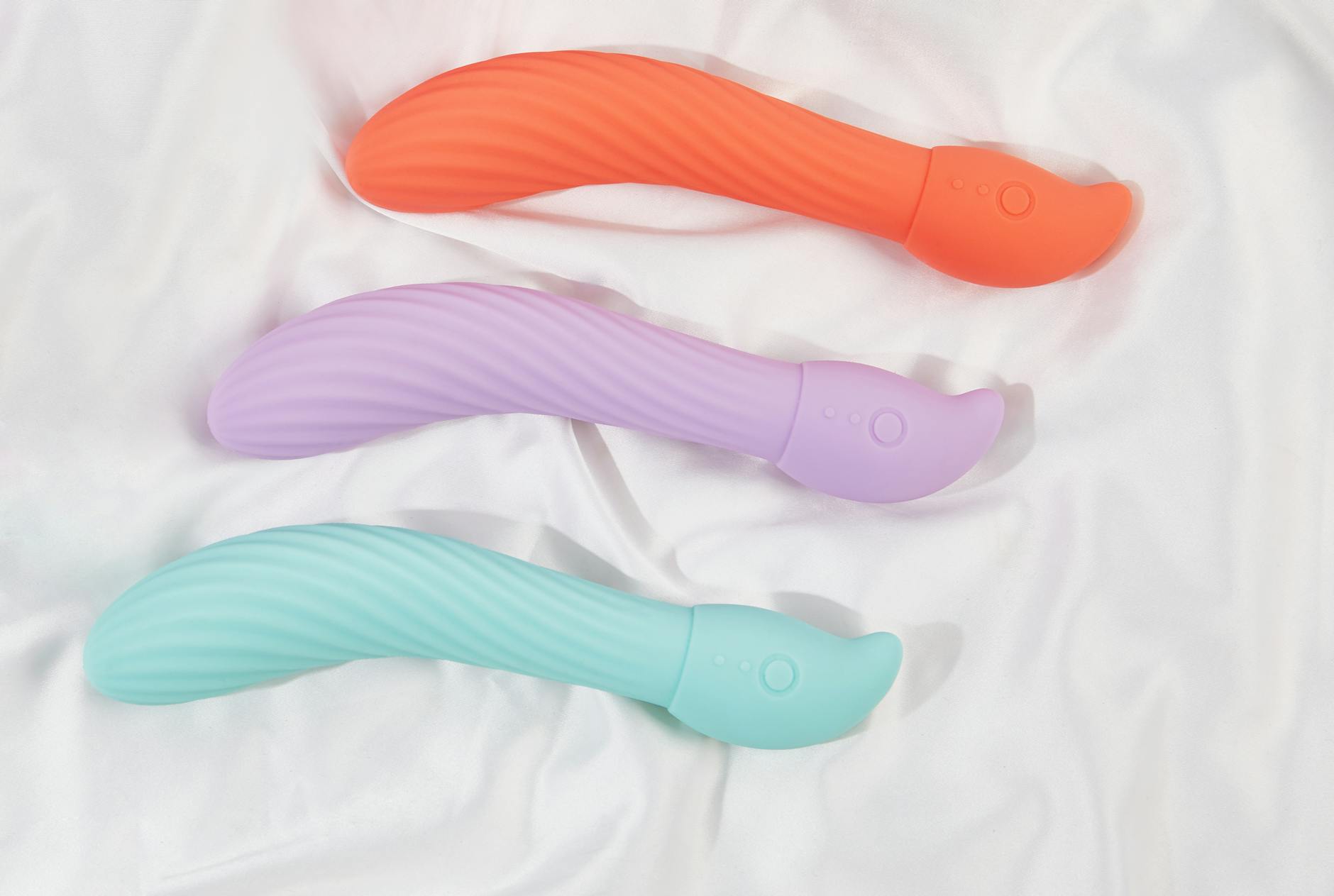
You've decided you want to explore clitoral vibrators. Good. Then you look at the options and suddenly there are forty shapes, intensities, materials, and price points. Something that should feel exciting starts feeling like homework. Between you and me, most of that complexity is manufactured. A lemon vibrator for first-time users doesn't need to be complicated.
If your only reference point is media depictions, you probably think vibrators are louder, more intense, and more clinical than they actually are. Real clitoral vibrators are nothing like that. The best ones use patterns and suction rather than raw power, which means they feel closer to focused pressure than to a dentist's drill.
A lemon vibrator, for instance, uses air-suction stimulation rather than vibration alone. This means it doesn't numb the area over time like traditional vibrators sometimes do. You get sustained sensation without the wear-out effect. For someone just starting out, this is huge because it means your first experience is more likely to be genuinely pleasant rather than overstimulating.
Forget the marketing. Here's what moves the needle for a beginner.
Intensity matters more than you think. A lot of first-time buyers assume "more power is better," which is backwards. Start low. If a device only has three intensity levels and the lowest is still too strong, you've wasted money. Look for something with at least five settings, with the lowest being genuinely gentle. This matters especially if you have sensitive tissue or reactive skin.
Ergonomics beats aesthetics. Yes, pretty design is nice. But you'll use something that fits your hand and your anatomy way more often than something that looks good on the shelf. Test the shape mentally against your body. Does it reach the angle you actually need? Can you hold it comfortably for ten minutes? Most people underestimate how much the handle matters.
Material is non-negotiable. Medical-grade silicone, stainless steel, or borosilicate glass only. Avoid anything porous or made from PVC. Your vulva deserves better than mystery plastics. Silicone is forgiving and easy to clean; glass is smooth and temperature-play friendly; steel is firm and long-lasting. Pick what appeals to you, but verify it's body-safe.
Noise level is not trivial. If you share a bed or live in an apartment, a quiet device makes the experience way less stressful. The quietest options are usually air-suction designs, which is another reason they're great for beginners.
I see these patterns repeatedly in conversations with first-time users.
Buying something too intense because you assume you want maximum sensation. Nope. Pleasure is the opposite of force. Start at 20 percent intensity. You can always turn it up. You can't un-overstimulate yourself.
Ignoring your body's actual geometry. Some people have deeper clitoral structures; others have more surface sensitivity. A device that works beautifully for your friend might feel awkward on your anatomy. This is why understanding how different bodies respond to clitoral vibrators matters. Luckily, beginners' guides exist for this exact reason.
Not budgeting enough time for exploration. First use is not always fireworks. Sometimes it's a gentle discovery. Sometimes it's a dud. Give yourself at least three full sessions before deciding whether something works for you. Your body needs to acclimate, and your mind needs to let go of performance anxiety.
Overthinking battery life. USB-rechargeable is standard now and totally reliable. Don't let "battery anxiety" push you toward something more expensive. Modern recharge tech is good.
Here's the real talk: there's no universal "best" beginner vibrator because bodies are wildly different.
If you have high sensitivity or reactive skin. Go for air-suction first. The Lemon is the obvious choice here, but it's because suction technology genuinely suits sensitive tissue better than traditional vibration. Low-intensity air-pulse patterns let you build sensation gradually without irritation.
If you prefer broader, gentler stimulation. A wand-style vibrator covers more surface area. Something like the Lolly Mini gives you options without overwhelming any single spot. The smaller size makes it easier to handle as a beginner too.
If you like concentrated, direct pressure. A smaller bullet-style device lets you dial in exactly where you want attention. The Uno vibrator is straightforward: less menu, more focus. For a first-timer, sometimes simplicity is the feature.
If you want to explore with a partner. Remote-controlled options exist if that appeals to you, but honestly, most beginners solo-explore first. That's where you learn what your body actually wants, without negotiating someone else's involvement.
You don't need to spend a lot. You also don't want to spend almost nothing on something that breaks or irritates you. The sweet spot for a beginner is usually $50 to $90. This gets you medical-grade materials, decent longevity, and enough intensity options to actually explore.
Skipping up to $150 gets you boutique design and maybe longer warranty. Skipping down to $20 gets you a mystery device that might be porous, loud, or frustratingly weak. Your pleasure isn't a place to cut corners, but it's also not a status symbol.
I asked people who've been exploring for years what they'd tell their first-time selves. The answers were consistent.
"Buy something you actually like looking at, even in the drawer. You'll use it more." Turns out shame is real and aesthetic resistance is legit. If you cringe at your device, you use it less often.
"Start with the lowest intensity and assume you'll need lube even if you don't think you will." Preparation makes the whole thing easier and more enjoyable. No one regrets having lube nearby; plenty of people regret not having it.
"Ignore what online reviews say about intensity. Everyone's nervous system is different. Trust your own body." This is crucial. A five-star review saying a device is "absolutely powerful" doesn't tell you if it's right for your particular sensitivity.
"Don't treat your first choice as your forever choice." You might love it, or you might realize you want something different. Both are completely normal. Think of it as an experiment, not a commitment.
"Vibrators will desensitize you over time." Not true if you're using the right technology and rotating sensation types. Air-suction devices in particular don't create the numbing that raw vibration sometimes does.
"You have to orgasm for it to be successful." Nope. Pleasure, exploration, sensation, relaxation, and stress relief all count. An orgasm is one possible outcome, not the metric.
"Starting with a vibrator means you won't enjoy partner sex anymore." False. Knowing your own body better usually improves partner intimacy because you know what you actually want and can communicate it.
"You should be embarrassed about buying one." You shouldn't. Millions of people use clitoral vibrators. Reproductive health matters. Self-knowledge matters. Your pleasure deserves the same investment as your other wellbeing needs.
Choosing your first clitoral vibrator is genuinely simpler than marketing makes it seem. Prioritize body-safe materials, realistic intensity options, and comfortable ergonomics. Start low. Give yourself multiple sessions. Trust your own body over reviews or recommendations. And remember: this is exploration, not performance. There's no way to do it wrong.
If you're still stuck between options, get in touch with our team. They're weirdly good at matching people with devices that actually work for their bodies.
Start with at least five intensity levels, with the lowest being genuinely gentle. Most beginners actually need lower intensity than they expect. Your first setting shouldn't feel strong or jarring. It should feel like an invitation, not a demand. You can always increase from there as your body acclimates.
How do I know if a vibrator is body-safe?
Check the material. Medical-grade silicone, stainless steel, borosilicate glass, and aluminum are safe. Anything labeled PVC, jelly rubber, or "cyber skin" is porous and can harbor bacteria. Reputable brands always list their materials clearly. If the packaging doesn't specify, that's a red flag.
Do I need lube with a lemon vibrator?
Not always, but having it nearby is smart. Lube makes the experience smoother, reduces friction, and lets you explore longer without irritation. Water-based lubricant is compatible with silicone devices and easy to clean up. It's not cheating; it's preparation.
How loud are clitoral vibrators?
It depends on the technology. Air-suction devices like the Lemon vibrator are quite quiet, often barely louder than a whisper. Traditional vibrators vary wildly, from subtle to noticeably loud. If noise matters in your situation, ask before buying or look for air-suction options.
Can I use a vibrator if I've never had an orgasm before?
Absolutely. In fact, many people have their first orgasm with a vibrator because the consistent stimulation removes performance pressure. Go slow, explore what feels good, and remember that an orgasm isn't the only goal. Pleasure and sensation are valuable on their own.
Should I buy the most expensive option?
No. The best device for you is one that matches your body, preferences, and budget. Expensive doesn't mean better. A $60 device that fits your anatomy perfectly beats a $200 device that doesn't. Quality materials matter; price tags don't always reflect that.