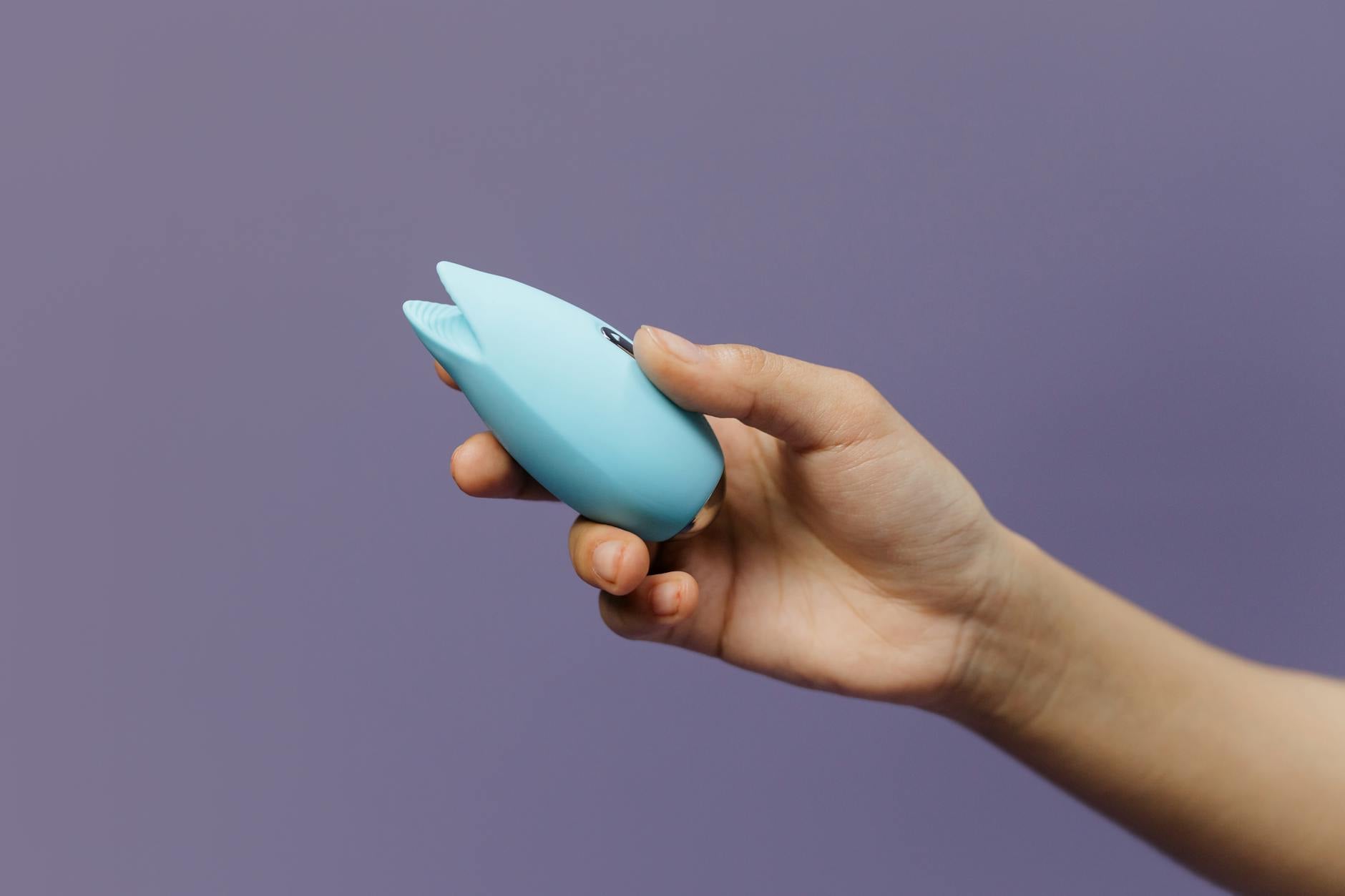
Here's the thing nobody mentions when you buy your first lemon vibrator. The intensity that makes your friend lose her mind might feel like overkill to you. Or worse, the setting everyone raves about might leave you frustrated because it's not strong enough. This isn't a you problem. It's a vibrator-matching problem.
Clitoral sensitivity is wildly individual. It shifts with your cycle, your stress level, how much foreplay you've had, whether you've had an orgasm recently, and whether Mercury is in retrograde. Okay, maybe not that last one. But the point stands. Finding your intensity sweet spot isn't about following instructions. It's about understanding how your body actually responds.
Most people think vibrator shopping ends once you pick a toy. You use it the way it comes, probably on the highest setting because "more intense" sounds like "more pleasure." That's backwards. Intensity is a dial, not a fixed thing. Using the wrong setting is like eating food that's either lukewarm or scalding. The medium is where the flavor lives.
When your lemon clitoral vibrator's intensity is mismatched to your sensitivity, three things happen. First, you experience what I call "stimulation fatigue." Your nerve endings get numb from too much intensity, and suddenly the same suction pattern that felt amazing ten minutes ago feels like nothing. Second, you might not reach orgasm at all because you're working against your body instead of with it. Third, and this is the sneaky one, you convince yourself the toy doesn't work for you when really the intensity is just wrong.
Sensitivity doesn't come in one flavor. I work with clients across the whole spectrum, and I've learned that most people fall into roughly three categories. This isn't where you live permanently. You might move between them depending on where you are in your cycle or how stressed you are. But it's a useful map.
High sensitivity. Your clitoris is responsive immediately. Light touch, gentle suction, patterns with variation. You reach arousal quickly, which is great. The trap is that intensity levels that feel normal to other people feel aggressive to you. You're not broken. You're just wired for nuance. For you, starting at pattern 1 or 2 on a lemon vibrator is the right call.
Medium sensitivity. Most of what you've read about vibrators was probably written for you. Moderate pressure, clear rhythms, a good mix of steady and varied patterns. You're in the sweet spot where most toys work well. Your challenge is probably boredom over time, not finding the right starting point.
Low sensitivity. Your body wants more. Stronger suction, higher speeds, more intense patterns. This doesn't mean anything is wrong. Some bodies genuinely need more stimulation to reach their peak. The error most people make is buying a weak toy and then suffering through it. If you're low sensitivity, you need a toy that goes deep, not a toy everyone else likes.
Many people are also "variable sensitivity." You might be high sensitivity right after an orgasm, medium in the middle of your cycle, and low right before your period. This is completely normal and actually useful information. It tells you that flexibility in your toy matters more than intensity alone.
Start slower than you think you need to. This sounds counterintuitive, but it's the fastest way to find your real baseline instead of your defensive position. When you're testing a lemon vibrator for the first time, begin at pattern 1 or the gentlest setting. Spend two to three minutes there. Pay attention to how it actually feels, not to whether you'd like it stronger.
What you're looking for is a "yes, that's actually pleasant" response. Not neutral. Not "this is fine." Pleasantly. If pattern 1 feels like nothing, move to pattern 2 and repeat. Keep going until you land on a setting where your body is like, "Oh, I see. I could enjoy this."
Once you find that baseline, stay there for at least three to five minutes. Your nerves are waking up. Sensation deepens when you're patient with it. After that time, you can experiment upward. Move to pattern 3, then 4. Each time, pause and actually notice what's different. Does it feel better, or just more? There's a real difference.
The goldilocks zone for most people is pattern 3, 4, or 5 on a lemon clitoral vibrator. Not the highest setting. Not the lowest. Somewhere in the middle where you can sustain pleasure without numbing out. That's where you build toward orgasm, not away from it.
Here's a trick I recommend to clients who get stuck. Don't stay on the same pattern for twenty minutes. Your body adapts, which is why high intensity stops feeling intense. Instead, move gradually upward. Spend five minutes on pattern 3. Move to pattern 4 for five minutes. Then pattern 5. This keeps your nerves engaged because the stimulation is changing, not repeating.
Alternately, try mixing steady patterns with pulsed or varied patterns. Your lemon vibrator usually has both options. Patterns like waves or pulsing feel different from constant suction even at the same speed. Switching between them prevents that numb feeling and keeps momentum building.
If you find yourself plateauing, try this. Lower the intensity slightly and shift position. Sometimes your clitoris needs a different angle to keep responding. The suction pattern that felt perfect from straight on might open up completely if you angle your pelvis. Movement matters as much as vibration.
Let me be clear. Intensity should never hurt. Not in a good way, not in a "push through it" way, not at all. If a pattern on your lemon vibrator causes sharp pain or uncomfortable pinching, stop using that pattern. Your body is giving you clear feedback. You're either on too high an intensity, or the pattern itself isn't compatible with your anatomy.
This is different from slight achiness or a "that's a lot" sensation. Slight discomfort when you're on the highest settings is sometimes just your body saying "okay, I have limits." But sharp pain or burning means reset to a lower pattern and move from there. If every setting causes pain, consider whether you need lubrication, more foreplay, or possibly a different toy shape altogether.
Your baseline will shift. If you use your lemon vibrator frequently, you might notice that pattern 3 doesn't feel as exciting in week three as it did in week one. This is normal. Your nervous system adapts. The answer isn't to immediately jump to the highest intensity. Try taking a break for a few days. Really. Two or three days off usually resets your sensitivity enough that pattern 3 feels fresh again.
Alternately, rotate between toys or patterns you haven't used in a while. If you've been loving the suction side of your lemon clitoral vibrator, switch to the pulsing patterns. Your nerves will light up because they're responding to something new. Many people think they need a stronger toy when really they need a different sensation.
Your cycle also matters. Many of my clients find they can handle much higher intensity right before their period. Mid-cycle sensitivity often runs lower. A few days after ovulation, medium intensity feels perfect. Tracking this isn't about being complicated. It's about working with your body instead of expecting it to be consistent on a fixed schedule.
If you're exploring a lemon vibrator with someone, communication about intensity is non-negotiable. Your partner might assume "higher is better" or might be surprised by what actually feels good for you. The kindest thing you can do is tell them your intensity baseline upfront.
Say something like, "I usually enjoy this on setting 3 or 4, not the highest. Can we try it there first?" This removes guessing and also protects you from the surprise of someone cranking it to level 8 when you were expecting level 3. It sounds small, but it changes everything about the experience.
If you're not sure yet what your baseline is, explore it together gently. Start low, check in, move gradually higher. Your partner gets to watch your pleasure response, which is actually hot. And you get to figure out your intensity in a pressure-free way.
Don't assume you have to start on the setting everyone else recommends. Don't jump straight to the highest intensity because you're impatient. Don't stay on the same pattern for thirty minutes and then blame the toy for not working. Don't use extreme intensity as a shortcut to orgasm. Don't ignore pain in the name of "maybe I just need to get used to it."
Do start low. Do experiment gradually. Do take breaks if sensation numbs. Do mix patterns and speeds. Do pay attention to your body instead of following a script. Do adjust intensity based on your cycle. Do communicate with partners about your baseline.
The goal isn't to find the "right" intensity universally. It's to find your intensity. The one that keeps you engaged, that builds sensation instead of replacing it, that feels good enough to keep going. That changes over time, and that's fine. You're allowed to adjust.
What if I'm numb to every intensity setting on my lemon vibrator?
This usually means you've spent too long on the same pattern or intensity. Take a break for three to five days. Your sensitivity will reset. When you come back, start at pattern 1 again and go slowly. Numbness is adaptive desensitization, not a sign that the toy doesn't work.
Can I damage my clitoris by using too much intensity?
Not from vibration alone. Healthy tissue is resilient. The real risk is friction irritation if you're not using enough lubrication or if you're using such high intensity for so long that the area becomes sore. If soreness happens, treat it like you would any minor skin irritation. Gentle washing, a few days off, and less intensity next time.
Why does my lemon clitoral vibrator feel stronger some days than others?
Your clitoris has a natural sensitivity cycle. Hormones, stress, fatigue, how much foreplay you've had, and whether you've recently had an orgasm all affect responsiveness. You're not imagining it. The toy hasn't changed. Your body has.
Is it normal to need different intensities depending on whether I'm with a partner?
Completely. Many people need gentler intensity during partnered sex because the mental load and pressure feel different. Other people need more intensity because being with someone else is more arousing. Neither is standard. Your preference is the standard.
How do I know if my lemon vibrator isn't strong enough for me?
If you're on the highest intensity setting and you feel like you're working really hard for minimal response, you might be low sensitivity. Before upgrading, try taking a break from the toy for several days and then starting over at pattern 1. You might be numbed from overuse. If after a reset you still feel like the toy isn't strong enough, that's real feedback. You might genuinely need a toy with more power.
Can I build up tolerance to my lemon vibrator and need a stronger one?
Yes, in the sense that nervous system adaptation happens. You won't suddenly need maximum intensity forever. But taking breaks, varying patterns, and rotating between toys usually fixes this long before you need a new toy entirely. Tolerance feels like a permanent problem until you realize it's just your nervous system saying "surprise me."
Finding your intensity is personal. What works for your body is the right answer, even if it looks nothing like what works for anyone else. Start low, listen carefully, and adjust based on what actually feels good. That's how you turn a lemon vibrator from a toy you think you should enjoy into one you actually can't wait to use.