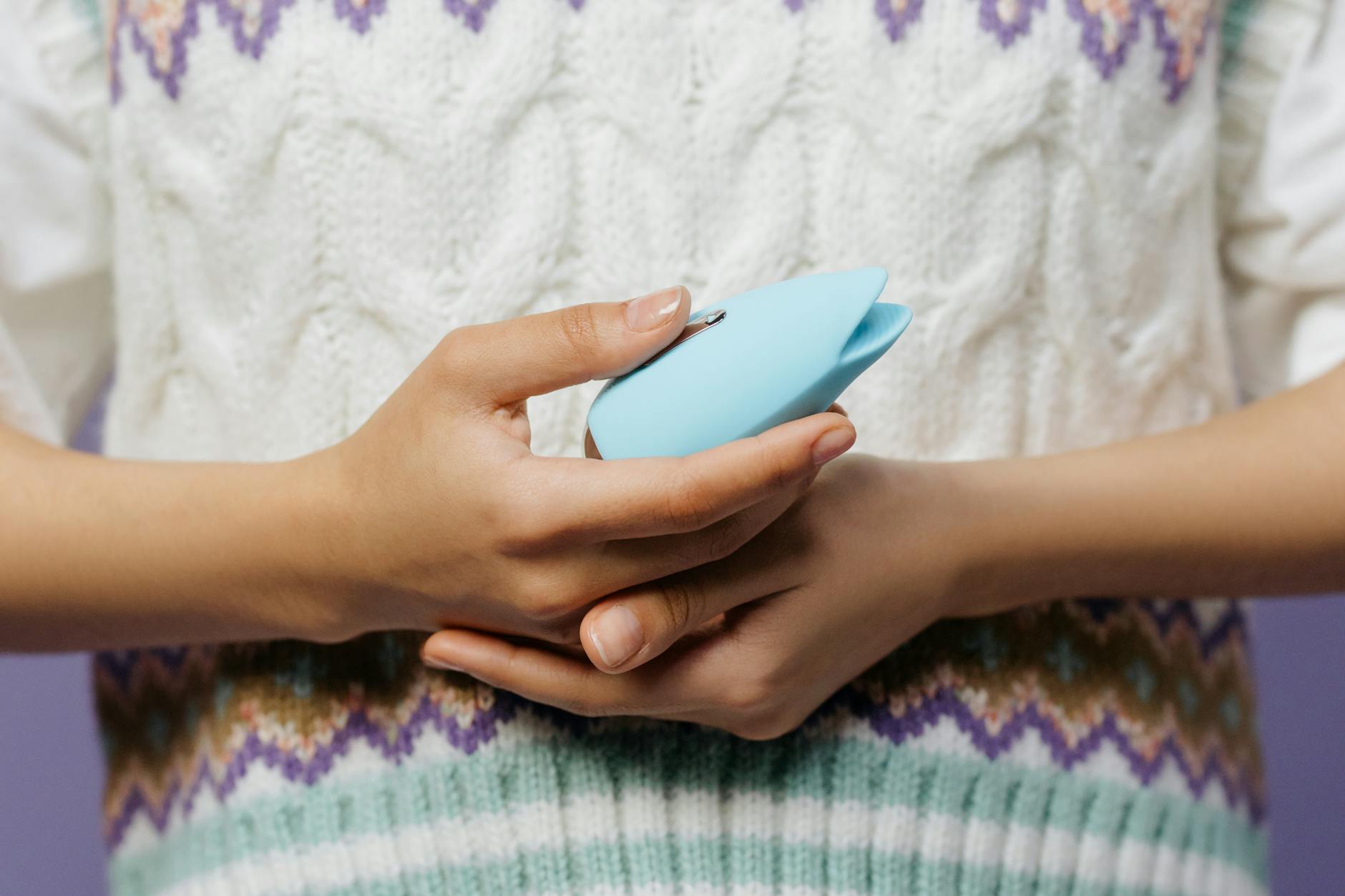
How to Use Lemon Vibrators When Reconnecting Intimately After Depression
Depression flattens desire and numbs sensation. When you're ready to feel again, clitoral vibrators can help bridge the gap between where you were and where you want to be.
Depression doesn't just make you sad. It erases desire, dulls sensation, and creates a kind of emotional distance from your own body that feels almost clinical. Many people emerge from depression and expect sex to automatically feel good again. It doesn't. Pleasure isn't a switch. It's something you rebuild.
When you're depressed, your brain isn't producing enough dopamine and serotonin. These aren't just mood chemicals. They're the exact same ones that fire during arousal and orgasm. So when depression lifts, your nervous system doesn't automatically remember how to feel pleasure. It's like a muscle that's been dormant.
Physically, depression also causes:
Decreased blood flow to sensitive tissue
Reduced skin sensitivity and responsiveness
A flattened ability to build arousal gradually
Difficulty with mental focus during sex (your brain keeps pulling away)
Your partner might interpret this as lack of interest in them. That misunderstanding can create a second layer of disconnection on top of the depression itself.
Air-suction technology (like what you get with The Lemon Lem clitoral vibrator) doesn't rely on friction. This matters after depression because your nervous system needs a reintroduction to pleasure that doesn't feel overwhelming or goal-oriented. Suction creates a sustained, rhythmic sensation that's less startling than vibration alone.
For someone rebuilding sensation, this is key. The sensation is consistent and predictable. Your brain can relax into it instead of bracing against something that might hurt or feel too intense.
The Lem vibrator also gives you control at every level. You can start on the gentlest setting and stay there for weeks if you need to. There's no pressure to "perform" or reach a specific outcome. That psychological safety is half the battle.
First week after deciding to reconnect: solo exploration only. No partner present, no audience, no expectation of orgasm. The goal is sensation mapping. Use your lemon clitoral vibrator on settings 1 or 2 in a comfortable space where you won't be interrupted.
Start with just 10 minutes. Notice what you feel. Notice where sensation is completely absent and where it's present. This isn't meditation or mindfulness theater. You're literally testing your nervous system's response.
Most people emerging from depression report that the first sessions feel almost numb. That's normal. Keep going. Your nervous system rebuilds with repetition.
Second week: extend to 15-20 minutes. If you haven't felt anything by day 14, that's also fine. Pleasure is creeping back, not flooding back. Document what changes. Does setting 3 feel different from setting 2? Does morning feel different from evening? This data matters.
Third week onward: introduce your partner to the process, but with clear boundaries. They're not here to make you orgasm. They're here to help you feel safe. Some people want a partner present but not touching. Some want hand-holding. Some want conversation about what they're noticing.
Don't frame this as "I'm broken and need fixing." Frame it as "My nervous system took a hit, and I'm rebuilding sensation. This is what helps, and here's what I need from you."
Three things to communicate clearly:
"I'm not reconnecting at your pace or mine. This is a biological process."
"When I use this, I need you to [stay in the room / leave / be on your phone / hold my hand]. This is what makes me feel safe."
"If orgasm happens, great. If it doesn't, that's not failure. I'm measuring success by sensation, not outcome."
Many partners worry that the lemon adult toy means they're doing something wrong. Address this directly. Say: "This isn't about you. This is about my brain and body recalibrating."
If you're three weeks in and feeling almost nothing, that doesn't mean the lemon clitoral vibrator isn't working. It means your recovery timeline is longer. Keep going. Some people need six weeks. Some need three months. Depression took months to take hold. It gets to take time to leave.
If numbness is accompanied by ongoing depression symptoms, talk to your therapist or doctor. Sometimes medication adjustment helps. Sometimes you need a different medication entirely.
One specific scenario: if you're on an SSRI (selective serotonin reuptake inhibitor), sexual side effects are common. This is a conversation worth having with your prescriber. Sometimes switching timing (taking your dose after sex instead of before) helps. Sometimes a different SSRI causes fewer side effects. Don't just accept sexual numbness as the cost of treatment.
This is counterintuitive for people in relationships, but it matters: get comfortable with your own pleasure first. Spend at least a month using the Lem vibrator alone before you bring your partner into the experience.
Why? Because when your partner is watching, your brain diverts 30% of its resources to "Am I performing correctly?" You need your full nervous system focused on sensation.
Once you've experienced consistent pleasure solo, bringing a partner in actually enhances it. Your nervous system has a template now. You're not trying to prove anything. You're inviting them into something you already know feels good.
Month one: numbness is normal. Consistency matters more than intensity. Three sessions per week is enough.
Month two: you might start noticing micro-sensations. A shift in sensation between settings. A particular pattern that feels better. These tiny changes are your nervous system waking up.
Month three: Some people experience their first orgasm post-depression around now. Others take longer. Both are completely normal. The point is you're feeling something.
Month four and beyond: You can start playing with your partner's involvement. Some couples use the lemon sucker as part of partnered sex. Some keep it solo. There's no rule.
The metric isn't "Did I orgasm?" The metric is "Am I feeling more sensation than last month?"
Fear: "If I can't orgasm with my partner present, they'll think I don't want them."
Truth: Orgasm with a partner present is a different nervous system state than orgasm alone. Depression makes the jump even harder. Build solo pleasure first.
Fear: "Using a vibrator means I'll never enjoy partner touch again."
Truth: Studies show the opposite. Using a vibrator solo actually increases sensitivity to partner touch over time because your nervous system is rebuilding overall sensation.
Fear: "My partner will feel replaced by the device."
Truth: Frame it clearly. This isn't replacing them. This is rehabilitation. Once your nervous system is rebuilt, partnered sex will feel better for both of you.
Fear: "If I get pleasure from the vibrator, I should be able to get it from sex."
Truth: Nope. Vibration and suction recruit different nerve pathways than penetration. They're not comparable. Your body needs both types of stimulation to fully wake up.
When depression lifts, shame often remains. Shame about time lost. Shame about the impact on your relationship. Shame about needing a tool to feel pleasure again. This shame can actually block sensation.
Give yourself permission to rebuild slowly. Permission to use a device without it meaning something's "wrong" with you. Permission to prioritize your nervous system over your partner's timeline.
Depression told you that you didn't deserve pleasure. Now that you're here, you're proving that lie wrong.
Choose a private space where you won't be interrupted for 20 minutes. Lock the door if you share a home. Tell your partner: "I need 20 minutes alone. I'll let you know when I'm done."
Have your lemon vibrator, a bottle of water-based lubricant, and a towel nearby. Start fully clothed if you want to. There's no "right way" to do this. Your comfort matters more than any rule.
Set a timer for 10 minutes. Begin on setting 1. If nothing happens, that's fine. If something does, notice it. No judgment either way.
When the timer goes off, stop. Sit with what you felt for a minute. Drink water. Write down one word that describes the experience ("numb," "tingly," "warm," "nothing"). Tomorrow or next week, do it again.
Consistency rebuilds sensation faster than intensity. Show up regularly, and your nervous system will gradually remember.
Once you've had three solo sessions where you felt something, your partner can be present. Not to initiate. Not to guide. Just to be there. Some people hold their partner's hand. Some talk during it. Some prefer silence.
Your partner's job: observe, support, and ask questions afterward ("Did that feel different from last week?"). Not to judge. Not to try to make something happen.
This sounds like low-pressure sex, and it is. That's the point. Depression taught you to brace against sensation. Low-pressure reconnection teaches your nervous system that safety comes first, pleasure second.
Once pleasure returns, you can layer in the complexity of partnered sex again. But the foundation has to be rebuilt first.
Three to six months is typical for most people, but some take longer. Your timeline isn't a reflection of how "sick" you were or how "healthy" you are now. It's just your individual nervous system's recovery speed. Track what changes, not how fast it happens.
Absolutely. In fact, most people reconnect to pleasure while still medicated. What you're noticing is the baseline depression lifting enough that sensation can return. That's exactly the point.
That's a conversation, not a roadblock. Share what you're doing and why. If they remain uncomfortable, that's their work to do, not yours. Your nervous system's recovery isn't negotiable. The tool you use might be negotiable, but the goal (reconnecting to pleasure) isn't.
Yes. Depression often wraps itself in shame, and that shame sticks around even after the depression lifts. Using a vibrator isn't selfish or broken. It's rehabilitation. You wouldn't feel guilty about physical therapy after an injury. This is the same thing.
You can, but most people find that a gradual transition feels better. Maybe it's partner stimulation with your vibrator present. Maybe it's partnered sex twice a week and solo exploration once a week. Find the rhythm that keeps sensation building without overwhelming your nervous system.
That's incredibly common. Your nervous system is different when someone else is present. Different brain state, different body state. Keep both: solo sessions and partnered sex. Your nervous system needs both to fully rewire. One isn't failure. They're just different.
Depression took something from you temporarily. Your sexuality, your desire, your ability to feel. The fact that you're here, reading about how to reconnect, means you're ready to reclaim it.
The lemon clitoral vibrator isn't a magic fix. It's a tool that helps your nervous system remember what pleasure feels like when everything else is making you numb. Week by week, session by session, that numbness lifts.
Your body knows how to feel good. Depression was lying when it told you it forgot.
When you're ready to take the next step, whether that's bringing a partner into the process or exploring what else might help, reach out. You don't have to figure this out alone.