Mismatched libido is the relationship equivalent of a slow leak. It doesn't announce itself with a bang. It shows up as quiet resentment, as one partner feeling rejected and the other feeling pressured, as sex becoming something you negotiate instead of enjoy.
Here's what makes it hard: desire mismatch isn't about love. It's not about attraction. It's not even always about the sex itself. It's about the gap between what two people want at any given moment, and how that gap gets interpreted as rejection or obligation.
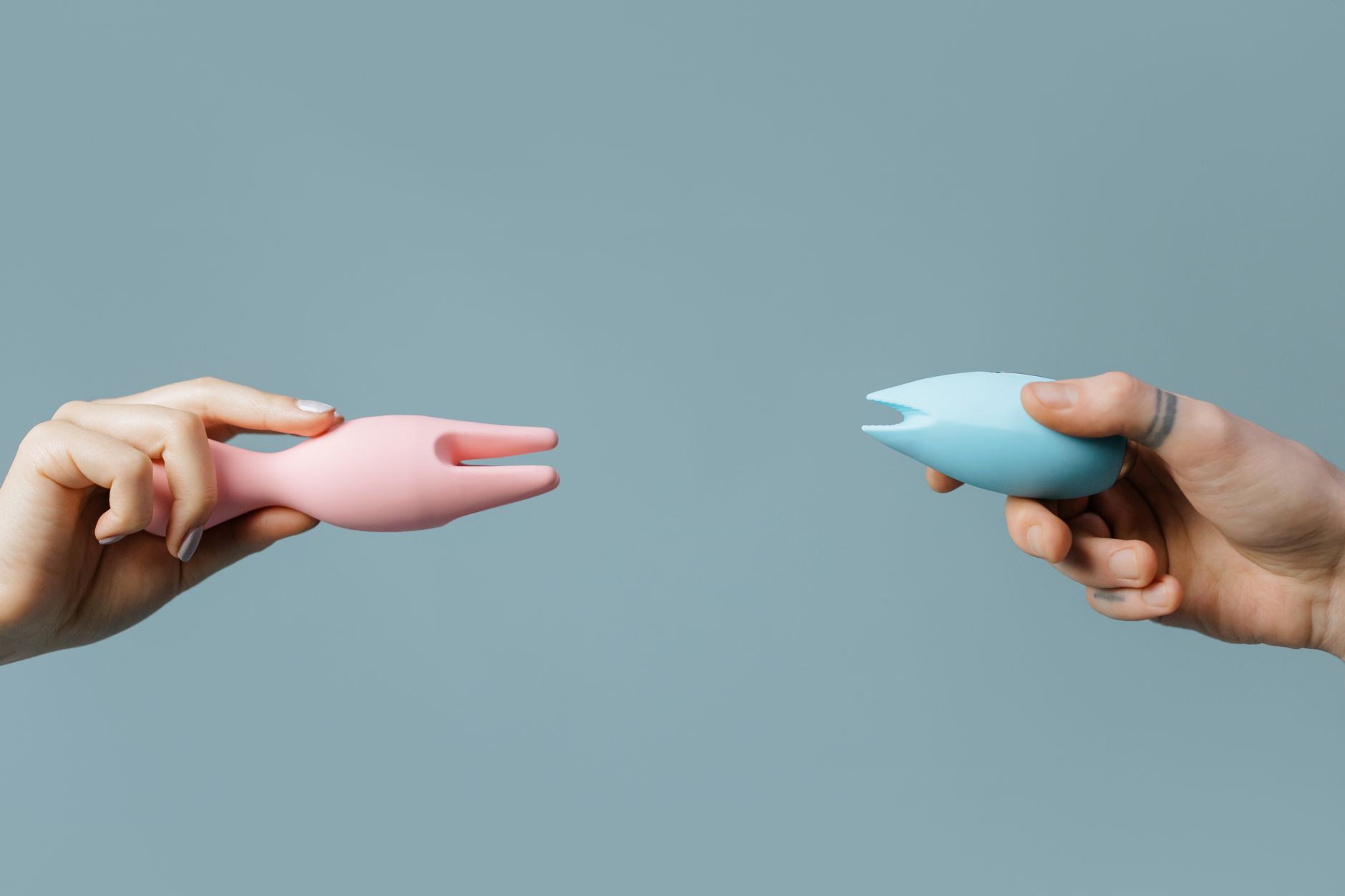
Lemon vibrators and other clitoral toys don't fix mismatched libidos. But they do something more useful. They give the higher-desire partner an independent source of pleasure, they take pressure off the lower-desire partner, and they create a third option that isn't "argue about it" or "one person gives up."
Stress and mental load. The person managing more household chaos, childcare, or work stress usually has less cognitive space for arousal. Arousal requires your brain to disengage from the to-do list. If someone's running the mental household operations, they're already depleted.
Hormonal differences. Some people's desire is tied to their cycle, medication, or age-related hormone changes. A partner on antidepressants, in perimenopause, or recovering from pregnancy experiences desire differently. This doesn't change. Expecting it to is a losing game.
Different baseline needs. Some people are wired to want sex twice a week. Others are wired for twice a month. Neither is wrong. But when you pair them, you get friction.
Emotional intimacy gaps. Often the person with lower desire in a mismatched pairing feels disconnected in other ways. They might want conversation, help with the kids, or quality time before sex feels appealing. When those needs go unmet, desire disappears.
Most couples try to "fix" mismatched libido one of three ways, and all three create more distance:
The negotiation. "Can we have sex twice a week instead of four times?" This frames sex as a transaction. The higher-desire partner feels managed. The lower-desire partner feels obligated. Both feel undesired.
The hope that things will change. Waiting for desire to magically align is like waiting for your partner to suddenly want their coffee the way you do. It doesn't happen. Acceptance matters more than hope here.
The performance. The lower-desire partner agrees to sex out of guilt, then checks out mentally. This often creates more distance because sex without actual desire feels hollow to both people.
None of these approaches acknowledge something important: the higher-desire partner has legitimate needs too.
This is where clitoral vibrators become genuinely useful. And I mean this carefully, because vibrators aren't a relationship band-aid. But when used with intention, they address the real problem at the heart of libido mismatch.
Let me be specific.
If the higher-desire partner has an independent way to access pleasure, three things shift:
The lower-desire partner feels less pressured. When sex isn't the only way the other person gets pleasure, it stops feeling like a chore or an obligation. The pressure lifts. Paradoxically, when pressure disappears, desire often returns, even if it's just more frequently than before.
The higher-desire partner stops waiting. Instead of hoping for a window of time when their partner is in the mood, they can meet their own needs on their own timeline. This sounds selfish until you realize it prevents the slow buildup of resentment that kills relationships.
You both remember that pleasure exists outside of partnered sex. This sounds obvious, but in mismatched relationships, sex becomes a thing partners do or don't do. Using a lemon vibrator solo, or even together, reminds you both that pleasure is multifaceted. Sometimes it's partnered. Sometimes it's solitary. Both matter.
Timing and framing matter enormously. Here's what I see work in practice:
Separate it completely from the libido mismatch conversation. Don't bring up a vibrator in the middle of a discussion about wanting sex more often. That reads as pressure or rejection depending on your angle. Instead, mention it neutrally, perhaps after sex when you're both content.
Frame it as self-care, not as a replacement for them. "I've been thinking about exploring my own pleasure more, kind of like how you read or exercise" works. "I'm getting this because you don't want sex enough" does not.
Lead with curiosity, not demand. "I'm curious what this feels like" invites them into exploration. "You should be fine with this" creates defensiveness.
Show, don't tell. Some partners are less threatened by vibrators when they've seen them used in partnered contexts. If you're comfortable, using a lemon clitoral vibrator together during foreplay can demystify it. It becomes something you explore as a couple, not something you hide.
Acknowledge their feelings directly. If your partner expresses insecurity ("Do you need this more than me?" or "Are you not attracted to me anymore?"), take them seriously. Say: "My pleasure and your pleasure aren't a zero-sum game. I can use this solo and still want you. These aren't competing things."
Having the vibrator is one thing. Using it in a way that doesn't deepen the hurt is another. Here's what helps:
Establish clear solo time. You're not hiding it. But you're also not using it in front of your partner constantly in a way that might feel like rejection. Maybe you have twenty minutes after they go to sleep, or during a time when they're working. It's your time. They don't need to watch.
Create low-pressure shared moments. Sometimes using a lemon vibrator together during foreplay, or having your partner watch because they want to, is connecting rather than isolating. But this only works if it feels genuinely optional for both of you.
Don't frame it as compensation. Don't say, "Well, I got the vibrator, so we don't need to have sex as much now." This backfires. Your solo pleasure doesn't replace partnership. It supplements it.
Notice what changes without making it a big deal. Often, when the higher-desire partner's needs are being met independently, they're less resentful, less demanding, and paradoxically more present in the relationship. Your partner might notice this. You don't need to announce it. Let the shift speak for itself.
Libido mismatch is often a symptom of something deeper that a vibrator alone can't fix. So while you're integrating a lemon vibrator into your routine, have a separate, gentler conversation about the gap itself.
For the lower-desire partner: What would help you feel more desire? Is it emotional intimacy first? Is it stress relief? Is it a medication side effect that could be addressed? Is it that you don't feel heard on other things?
For the higher-desire partner: Beyond the frequency of sex, what's actually bothering you? Is it feeling rejected, undesired, or disconnected? Are you using "frequency of sex" as a proxy for "do you still love me?"
Often these conversations reveal that the real issue isn't mismatched libido at all. It's loneliness, resentment, or a partner who doesn't feel seen. A vibrator helps with the symptom. Honesty helps with the root.
If the libido gap is creating real dysfunction (one person is consistently angry, the other is avoiding intimacy entirely, you're having the same fight monthly), a couples therapist trained in sex and relationship dynamics is worth the investment. They can help you move past the mechanics of desire and into the actual emotional stuff underneath.
This isn't a failure. It's actually the smart move. Mismatched libido is one of the most common reasons couples seek therapy, and it's also one of the most resolvable issues when you have real support.
Mismatched libido doesn't mean your relationship is broken. It means you're two people with different needs trying to build a shared life. That's always going to require negotiation, creativity, and honesty. Lemon vibrators and other clitoral toys make that negotiation easier because they acknowledge one simple truth: pleasure doesn't have to be zero-sum. Your partner's desire doesn't determine your access to your own.
It can, if you're not intentional about how you introduce it and use it. The key is separating the vibrator from the libido mismatch conversation. Frame it as self-care exploration, not as compensation for their lower desire. And absolutely have the conversation where you say: "Using this doesn't mean I want you less. It means I'm taking responsibility for meeting my own needs." That distinction matters.
Both, ideally, but at different times. Solo use gives you pressure-free pleasure and space to explore your own body without performance anxiety. Shared use during foreplay can be connecting and demystifying. There's no rule here, except that it should feel genuinely okay to both of you. If your partner isn't comfortable with shared use, respect that. Solo use is completely valid.
There's no "right" frequency. Use it when you want pleasure and your partner isn't available or interested. Some people use lemon vibrators a few times a week. Others use them monthly. The point isn't the number. It's that you have an independent source of sexual satisfaction that doesn't depend on your partner's desire being aligned with yours.
This is real, and the insecurity is valid even if the boundary itself might need renegotiation. Start by understanding what the insecurity is actually about. Do they feel like they're not enough? Do they worry you're losing interest? Do they have shame around vibrators in general? Once you understand the root, you can address it directly instead of just accepting or fighting the boundary. Sometimes a conversation with a therapist helps here.
Not directly. But it can reduce resentment, which creates space for actual connection. When the higher-desire partner isn't desperate and the lower-desire partner isn't pressured, you're working from a calmer place. That sometimes (not always) allows desire to shift naturally. But if the gap is about emotional disconnection, a vibrator won't fix that. It'll just make the tension quieter.
Yes. Using a lemon clitoral vibrator during foreplay, with your partner actively involved and interested, creates partnership. You might use it while they stimulate other parts of your body. You might take turns exploring different sensations together. The difference is intentionality. You're not using it because your partner doesn't want to engage. You're using it as part of mutual exploration.
Libido mismatch is one of the hardest relationship problems to talk about honestly, which makes it one of the easiest to let fester. Lemon vibrators don't solve the underlying gap. But they do something more practical: they give both partners more autonomy, less resentment, and a way to meet their own needs without negotiating constantly.
That's not the same as fixing the problem. But it's the difference between a manageable tension and a slow-burning resentment that quietly erodes the rest of your relationship.
If you're navigating this, know that you're not alone, it's not your fault, and it's worth addressing directly instead of hoping it changes. Whether that's with a vibrator, a therapist, or both.