Here's the thing about partner intimidation and toys
Your partner didn't say no. They said yes, but with a question underneath. "Will this make me feel inadequate?" It's not about the toy itself. It's about what they think the toy means about them.
Couples
They want to explore with you. They're just worried it means they're not enough. Here's how to frame toys as a bridge, not a replacement.
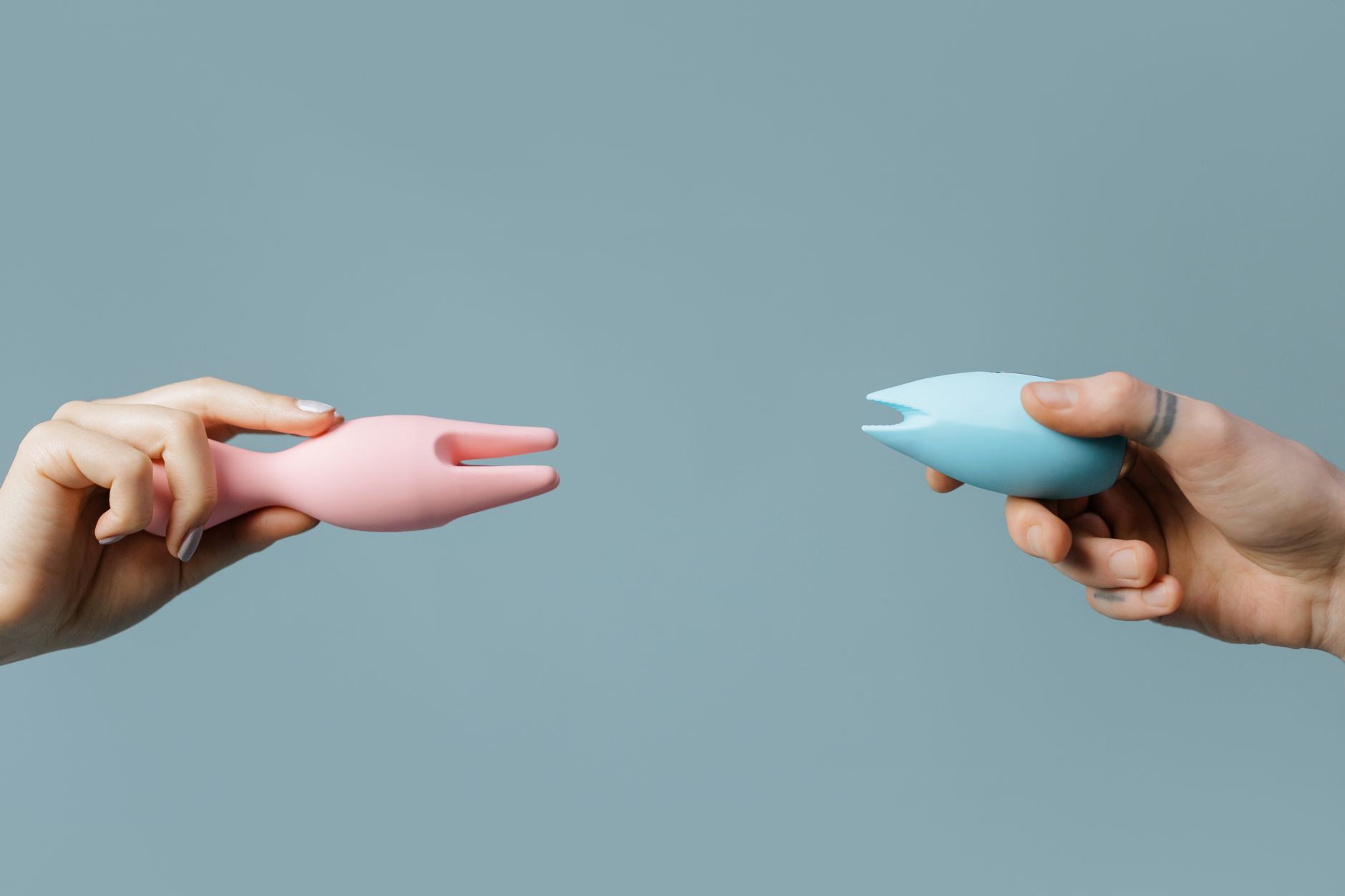
Your partner didn't say no. They said yes, but with a question underneath. "Will this make me feel inadequate?" It's not about the toy itself. It's about what they think the toy means about them.
I see this in my practice constantly. One partner brings up a lemon vibrator or other clitoral toy, and the other partner's first instinct isn't curiosity. It's a small spike of anxiety. Have I not been doing this right? Does my partner need this because I'm not satisfying them enough?
That narrative is completely normal. It's also completely wrong. And if you don't reframe it clearly before the toy ever enters the bedroom, you'll end up with a partner who participated once out of obligation and then quietly resists every time you bring it up.
Most people grow up learning one model of partnered sex. Bodies fit together in a certain way. Pleasure flows in a certain direction. A vibrator disrupts that model. It introduces a third element. It suggests that what two bodies alone can do together might not be enough.
That's the fear. Not "I'm bad at sex." More like "This is saying something changed, and I don't know if I like change."
Here's what's actually true: a partner's intimidation isn't about your pleasure capacity. It's about control and predictability. Your partner knows how to navigate partnered sex with their own body. A toy is an unknown variable. Unknown variables feel risky.
The other layer is ego, and I say that with real compassion. We're trained to believe that being "enough" means being everything. One person, one set of hands, one experience should deliver all the pleasure. Introducing a toy can feel like a public admission that the current setup isn't working. For the partner holding back, that admission can sting.
Don't lead with the toy. Lead with the experience.
Something like: "I've been thinking about us trying something together that I think could be fun for both of us. I'm curious if you'd be open to it." Notice you haven't mentioned a toy yet. You're testing openness to novelty.
If they say yes, you can continue: "I'm interested in trying a lemon clitoral vibrator together. I want to be really clear about something though. This isn't because anything is wrong with what we have. It's because I want to explore what feels good, and I want you there with me."
The subtext matters here. You're saying: I want you involved in my pleasure, not replaced by a toy. You're the one I'm choosing to be with. The toy is just a thing we're using together.
Then give them permission to have feelings about it. "I know toys can feel weird at first. It's okay if you need time to warm up to the idea. We can go as slow as you want."
Start clothed. Seriously. Don't make the first encounter with a lemon vibrator happen during sex. That's too much novelty, too much pressure, too much potential for weirdness.
Instead, show it to your partner outside the bedroom. "This is The Lem. It's a clitoral vibrator. Here's how it works." Let them hold it. Let them turn it on and feel the suction patterns. Normalize it as an object before it becomes part of your intimate experience.
Then, when you do bring it into sex, have a plan. Something like: "I want to try it while you're inside me" or "I want to use it while we're kissing and you touch my body." Your partner needs to understand their role. Are they the one using it? Are they watching? Are they doing something else while you use it? That clarity removes the fog of uncertainty.
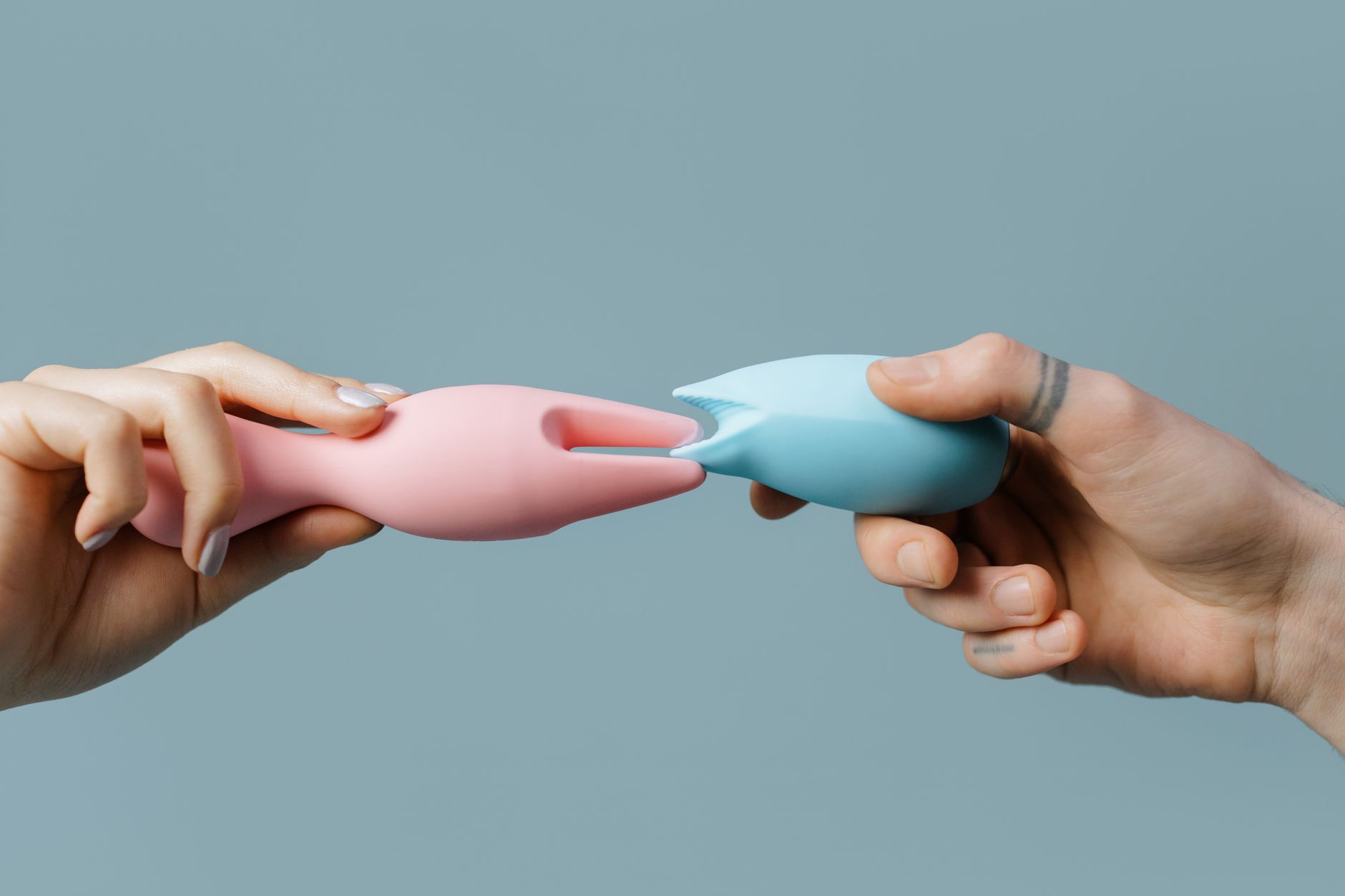
Photo by cottonbro studio on Pexels
They need to hear three things, and you may have to say them more than once.
First: "This is about addition, not subtraction." A vibrator isn't replacing partnered sex. It's expanding what's possible. You're not trading one for the other. You're adding a tool to a toolkit that already works.
Second: "Your role matters in this." Don't make your partner a bystander. If they're watching, they're not passive. They're participating. Their presence, their desire, their hands on your body while the vibrator works. That's all part of it. Make sure they know that their role is active, even if they're not the one holding the toy.
Third: "We figure this out together." This isn't you doing something to yourself in front of them. This is both of you exploring. If it's awkward the first time, that's normal. If you need to stop and laugh or adjust something, that's normal too. The whole thing is a conversation, not a performance.
They agree but seem distant when you actually try it. Stop. Ask directly: "Are you okay? What's coming up for you?" Your partner might need to voice the fear out loud before it stops being a wall between you. Let them.
They want to use it on you but grip it too hard or are clearly uncomfortable. Gently take back control. "Let me show you how this feels." You can guide their hand later once the novelty wears off. First time is about them getting used to the toy existing, not about them mastering technique.
They want nothing to do with it the first time but seem curious later. Don't push. Let them come to it. Some people need to see that you're having genuine pleasure with it, that nothing bad happened, before they're ready to engage. That's totally fine. Pressure kills curiosity every time.
They seem protective or possessive about the experience. That's actually a good sign. It means they're invested. It might feel like gatekeeping, but what they're often communicating is "I want this to be intimate and special between us." Lean into that. Use the toy together. Make it an "us" experience, not a "you" experience.
When introduced right, a clitoral vibrator doesn't create distance between partners. It creates intimacy through curiosity. Your partner gets to see you in genuine pleasure. They get to participate in making that happen. They get to learn new things about your body and what you enjoy.
That's powerful. That's the opposite of replacement. That's deepening.
The key is never losing sight of your partner's fear underneath the hesitation. They're not afraid of the toy. They're afraid of being not enough. So your job is simple: prove them wrong by showing up with intention, communication, and genuine desire to include them in what's unfolding.
That's information. They're not ready, and forcing it will only deepen resistance. Instead, use it solo for a while. Let them see that your pleasure didn't disappear because you took something into your own hands. Eventually, curiosity often wins out. If it doesn't, that's worth exploring in a deeper conversation. Sometimes resistance to toys signals something bigger about control, vulnerability, or sexual confidence that might be worth examining together.
Show them, don't tell them. Use the vibrator during sex with your partner involved. Most of the fear dissolves when they realize that the toy enhances the experience rather than replacing it. Their hands, their presence, their body are all still there and all still wanted. Words help, but lived experience is the real teacher.
Absolutely. The Lem and other clitoral vibrators are designed to be gentle. Suction toys distribute stimulation across the whole area, not a single point. Start on the lowest setting and show your partner exactly where and how it feels best. They'll relax once they see that you're enjoying it and nothing bad is happening.
With patience and honesty. "I love you and I'm also curious about my own pleasure. Those two things exist at the same time." Love and self-exploration aren't in competition. A partner's deepest fear is often that attention to yourself means less attention to them. Reassure them by continuing to show up for the relationship while also claiming space for your own pleasure. Both can be true.
Start simple. Show them the pattern you like. Let them hold it while you guide the pressure and movement. The physical act is less important than the emotional presence. They're choosing to participate. That matters more than perfect form. As comfort builds, technique will follow naturally.
Slow is almost always better for partners with intimidation. One conversation. Then showing it outside the bedroom. Then a first time during intimacy where there's no pressure to "perform." Slow builds buy-in. It lets your partner's nervous system adjust to the novelty. It also gives you room to course-correct if something feels off emotionally. Rush it and you create resistance that can last months.