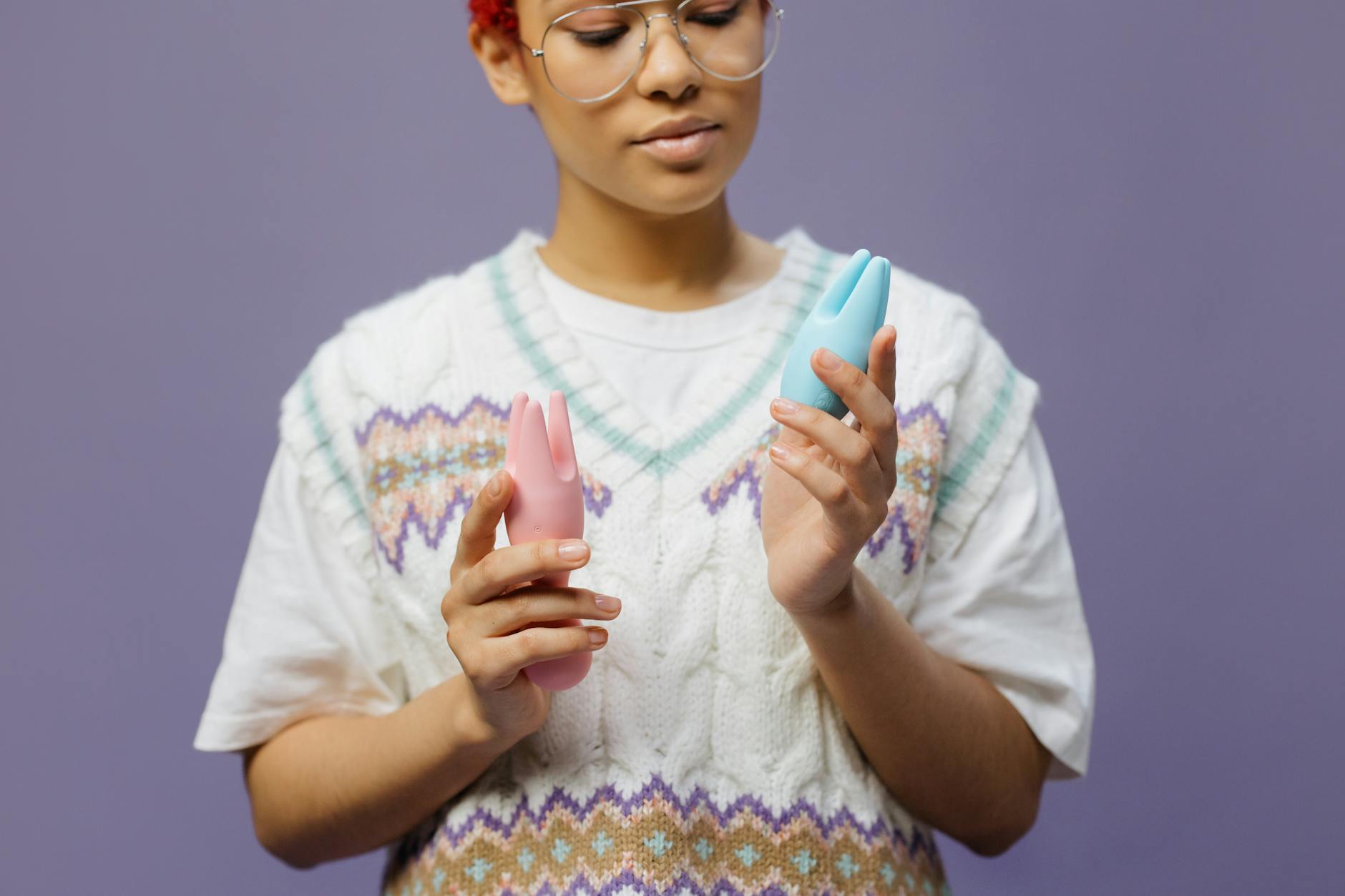
How to Use Lemon Vibrators When Anxiety Kills Arousal and Performance Pressure Takes Over
Anxiety doesn't just make pleasure harder to find. It actively blocks the neural pathways that create it. Here's how lemon clitoral vibrators can bypass that shutdown and rewire your body's response to touch.
Anxiety doesn't just make sex less fun. It actually prevents arousal from happening at all. Your sympathetic nervous system (the fight-or-flight response) and your parasympathetic system (the rest-and-digest one that enables pleasure) can't run at the same time. When you're anxious, one shuts the other down. This isn't a mental block you can think your way out of. It's neurobiology.
The moment performance pressure enters the room, your brain starts scanning for threats instead of processing sensation. You're not actually broken. You're just defending yourself.
Most vibrators work through repetitive, predictable stimulation. That rhythm is actually perfect for anxiety because it gives your brain something to analyze and "fix." You end up thinking about whether you're doing it right instead of feeling what's happening. Your attention splits between the sensation and the judgment, and neither one wins.
Lemon clitoral vibrators work differently. The suction-based stimulation on The Lem mimics the kind of indirect touch that doesn't trigger the same analytical response. Instead of a pattern your brain can monitor and second-guess, suction creates a sensation that's almost impossible to think your way through. You either feel it or you don't. That permission to stop analyzing is half the battle.
Before touching The Lem, you need to signal safety to your nervous system. That sounds soft, but it's mechanical. Your body won't shift into parasympathetic mode if you're treating this like another task to accomplish.
Three things that matter:
First, remove the clock. No timer, no "I need to orgasm in 20 minutes." Give yourself 45 minutes minimum and decide in advance that not orgasming is completely fine. This sounds like permission language, but it's actually threat removal. Your brain relaxes when there's no failure condition.
Second, control the environment. Locked door, phone silent, room temperature comfortable. This isn't mood lighting stuff. This is about removing actual distractions so your brain doesn't have to split focus between pleasure and vigilance.
Third, start with your clothes on. Seriously. If you go from anxiety spiral straight to vulnerability, your nervous system reads that as escalating risk. Spend 10 minutes touching yourself over your clothes, letting your body remember that touch is safe before you add nakedness and a vibrator into the mix.
Don't begin with the suction. Start with your hand. Get the device in your hand, feel the weight of it, turn it on to the lowest setting and just hold it against your inner arm or neck where sensation is high but stakes feel low. Let your nervous system register that this thing is safe and your body is allowed to respond to it without needing to perform.
Wait until you feel your body actually relax before you move down. This takes longer than you think it should. That's normal. You're essentially asking your nervous system to downshift, and that doesn't happen on a schedule.
When you do move to genital contact, start at the side of your clitoris, not directly on it. Indirect pressure is less triggering than direct pressure. You're teaching your body that pleasure doesn't have to be intense to count. Then, once you feel a genuine physical response (warmth, subtle tension, whatever your body does), you can experiment with different positions and patterns.
Your brain will try to pull you out of sensation and back into evaluation. You'll start thinking, "Is this working? Am I doing this right? Should I feel more?" The moment you notice that thought, you don't fight it. You interrupt it. Not with another thought (that just doubles down on thinking), but with a physical sensation.
Let The Lem create one thing for you: a focal point that's genuinely hard to think about simultaneously. That's the whole magic of it. Your nervous system has to choose between sensation and analysis, and suction-based stimulation is absorbing enough that sensation usually wins.
The other cognitive tool is anchoring. Before you start, pick one word that means "I'm safe, this is mine, this is allowed." Something that lands emotionally, not intellectually. Mine was "present." Then when your brain goes to the performance place, you return to that word. Not as a mantra, just as a reset button.
If arousal doesn't build in 20 or 30 minutes, you might assume you're broken. You're not. You're just recalibrating. Anxiety flattens your baseline arousal for months or years sometimes. The lemon clitoral vibrator is a tool for waking that system back up, but waking it takes weeks of consistent practice, not one perfect session.
I tell my clients: use it three times a week minimum, same time of day if possible, same environment if possible. Your nervous system loves predictability. After four to six weeks of this kind of regularity, most people report a measurable shift in how quickly arousal builds and how intense it feels.
If your anxiety is tethered to a specific relationship dynamic (performance expectations from a partner, guilt, fear of judgment), using The Lem solo is essential, but it's not the whole solution. A conversation needs to happen. Not during sex, not in the bedroom. Somewhere neutral, when you're both calm.
That conversation isn't about asking your partner to do more or try harder. It's about naming the dynamic that's making pleasure impossible. "When I feel like I need to come within a certain timeframe, my body locks down" is a specific, solvable problem. "I just can't relax" is vague and puts the burden on you to fix it alone.
You might also want to work with a therapist who specializes in sex and relationships. This isn't a character flaw or a sign that your relationship is broken. Anxiety + pleasure is a pattern that responds really well to targeted work.
You don't need to orgasm to know it's working. In fact, chasing the orgasm is often what activates the anxiety in the first place. Instead, notice these smaller signals of a downshifting nervous system:
Your breathing changes. You go from shallow chest breathing to deeper belly breathing naturally. Your shoulders drop. Your pelvic floor, which is probably clenched as a defense mechanism, starts to soften. You feel warmth or a gentle pulse, even if nothing more intense happens. Your mind gets quieter. Not silent, just less insistent.
Any of these means your parasympathetic system is engaging. That's the foundation. Orgasm is what builds on top of that, not the indicator that it's working.
If your anxiety is around partnered sex specifically, solo practice with The Lem for four to eight weeks creates a crucial separation. You rebuild evidence that your body is capable of pleasure without judgment or pressure. That matters.
When you're ready to involve a partner, the transition is slower than you think. Your partner doesn't jump straight into sex. They might watch you use The Lem, which sounds vulnerable but is actually reassuring. It removes the guesswork. They see what works for your body. You get to stay in control. Then, over time, they might incorporate it into partnered sex, or you might use it solo during partnered intimacy.
The key is that you're writing the rules, not responding to unspoken expectations.
If anxiety is severe (panic attacks around sex, flashbacks, complete shutdown), a sex therapist trained in trauma-informed work is worth the investment. A vibrator is a tool, not a treatment. If the anxiety has roots in past experiences or ongoing stress you can't name, therapy and vibrator practice together work way better than either one alone.
Same thing if you're on medication for anxiety. Some medications flatten sensation. That's real, and you might need to time your practice around your medication schedule or talk to your prescriber about whether a dose adjustment is worth exploring.
Anxiety and arousal don't have to be permanent opponents. They're responding to a threat your body perceives, real or not. The Lem, combined with nervous system awareness and consistent practice, gives you a way to gradually retrain that threat response. You're not forcing pleasure. You're creating the conditions where it can finally happen.
Not by itself, but consistent, intentional use over weeks can. Your nervous system learns through repetition that this scenario is safe and pleasure is possible. You're building new neural pathways alongside the anxious ones. Combined with addressing the underlying cause of anxiety (relationship dynamics, stress, past experiences), vibrators accelerate that rewiring process significantly.
Repetitive vibration requires less sensory bandwidth, so your brain has mental space to analyze and judge. That judgment reactivates anxiety. Suction-based stimulation on a lemon clitoral vibrator demands more sensory focus, making it harder for your mind to drift into performance mode. The sensation fills more of your attention.
Variation is huge here, but most people notice a shift in four to eight weeks of consistent use. That doesn't mean anxiety disappears. It means your body's default response to pleasure shifts from locked-down to cautiously available. Progress isn't linear. You'll have better weeks and harder weeks. That's normal.
Completely normal. If your nervous system gets triggered mid-session, stop. Rest. You're not failing. You're actually respecting your own boundaries, which is what teaches your system it's safe. Resume when you feel ready, or save it for another day. Pressure turns pleasure back into threat.
That depends on your relationship. If you're partnered and plan to reintegrate with them eventually, transparency helps. "I'm using this time to rebuild my relationship with my own pleasure so I can be more present with you" is honest and frames it as couple work, not solo work. If it's a new relationship or trust is fragile, you don't owe anyone access to your private practice.
The vibrator is one tool. If anxiety is pervasive or stemming from trauma, medication, chronic stress, or relationship issues, addressing those directly matters more than any device. A therapist who works with couples or trauma can help identify what's actually driving the shutdown. Then The Lem becomes part of a bigger strategy instead of carrying all the weight.
If you're feeling stuck, reach out to us. We can point you toward resources that fit your specific situation, or just listen to what's happening. You're not alone in this, and it's genuinely solvable.