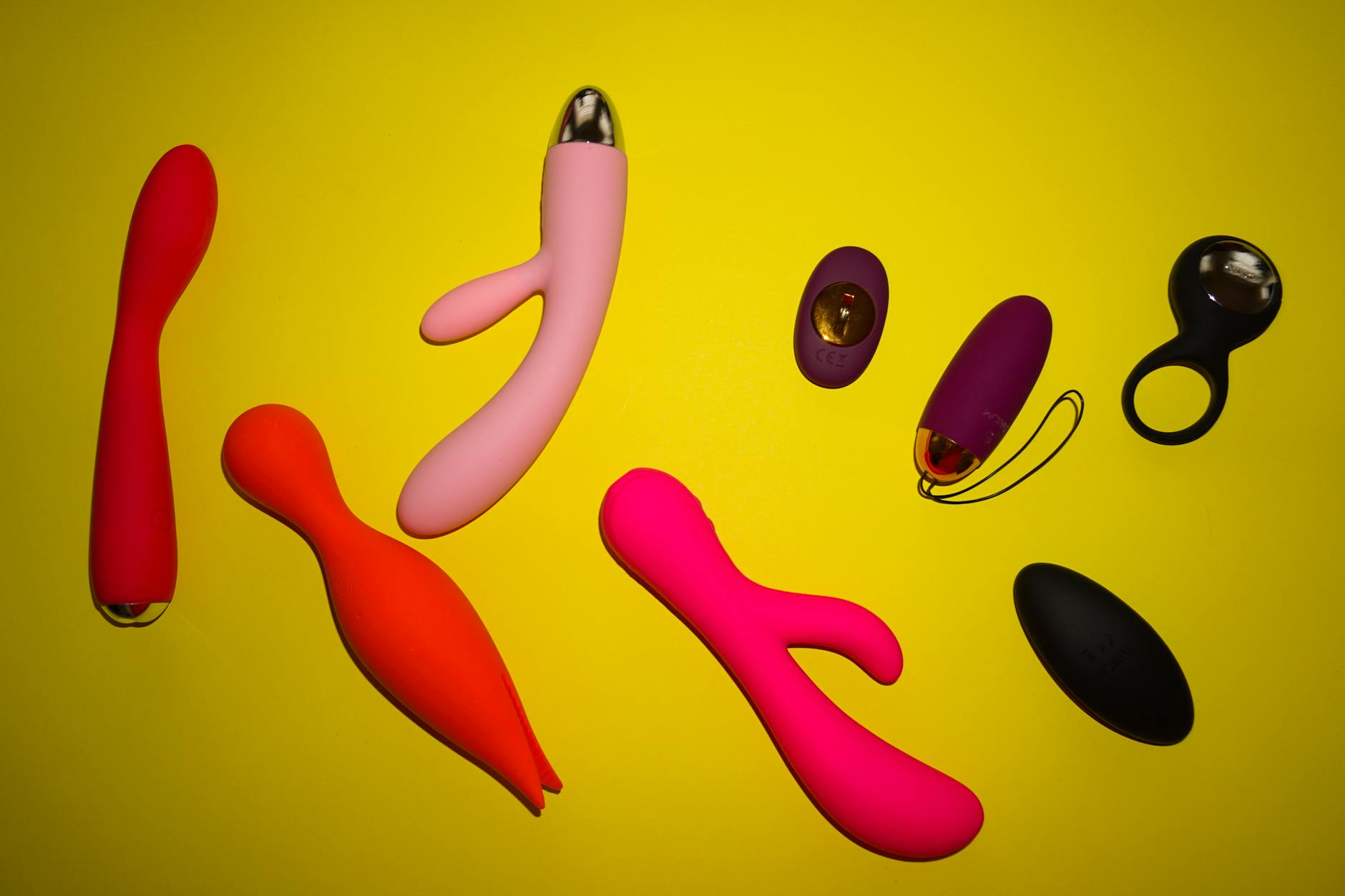
Here's the thing: you and your friend could use the exact same lemon clitoral vibrator, at the same intensity setting, on the same part of your body, and have completely different experiences. One of you might feel like fireworks. The other might feel almost nothing.
This doesn't mean someone's broken. It means bodies vary in ways that matter, and understanding those differences is the difference between a toy that works for you and one that ends up in a drawer.
Your clitoris has somewhere between 8,000 and 10,000 nerve endings, depending on whose anatomy research you're reading. But "your clitoris" is not a fixed thing. The visible part (the glans) is only the tip. The clitoral body extends internally, branches into two legs, and connects to the vestibular bulbs that wrap around the vaginal opening.
Here's what matters: nerve density is not even across this whole structure. Some people have more concentrated sensation in the glans. Others feel more in the labia or the vestibular area. Some have sensitive spots on the clitoral shaft that don't show up anywhere else.
This is why one person finds the Lem perfect on pattern 3, and another person needs pattern 5 on the exact same spot. The vibrations are identical. The nerve architecture isn't.
If you have a menstrual cycle, your sensitivity to vibration shifts throughout the month. Estrogen peaks around ovulation, and higher estrogen typically means more responsive clitoral tissue, faster arousal, and sometimes lower pain thresholds (which can mean certain intensities feel too much).
During the luteal phase (after ovulation, before your period), progesterone climbs and estrogen drops. Many people report needing stronger sensation during this window. Not because something's wrong. Because the hormone environment literally changes how your nerve endings respond to input.
Add in other hormonal shifts: birth control that suppresses estrogen, perimenopause, menopause, or hormonal transitions for trans partners. Sensitivity doesn't stay fixed. It moves.
As people age, tissue thickness changes (especially estrogen-dependent tissue). Pelvic floor tension increases or decreases. Blood flow patterns shift. All of this changes how vibration travels through tissue and how nerve endings perceive it.
This doesn't mean pleasure gets worse with age. Often it gets more refined. But it does mean the toy that worked at 28 might feel different at 38, and different again at 48.
I see this constantly with people who've used clitoral vibrators for years and suddenly feel like they need a different intensity setting. They think they've become desensitized. Usually they've just changed.
If you have vulvodynia, vaginismus, or a history of painful sex, your nervous system may interpret vibration differently than someone without that history. The sensory apparatus is intact, but the brain's processing of that input is changed.
Similarly, chronic pelvic floor tension (common in people who hold stress in their bodies) can reduce sensation. A hypertonic pelvic floor grips so hard that the vibration barely reaches the sensitive tissue underneath. Paradoxically, people with tight pelvic floors sometimes need more intense stimulation to feel anything.
On the flip side, people with hypermobile pelvic floors or reduced pelvic floor tone often experience sensation as more intense, sometimes almost too much.
Antidepressants (particularly SSRIs) are famous for blunting sensation. Not always, not for everyone, but commonly enough that it's worth noting if you've started a new medication and your toy suddenly feels less effective.
Diabetes and autoimmune conditions can affect nerve sensation. Certain cardiovascular medications affect blood flow, which affects arousal response. Even something as simple as dehydration changes how tissue feels.
I'm not saying don't take your medication. I'm saying understand that if your body's response to vibration changed around the time you started something new, that might be the reason.
This is the one people least expect: you can physically feel completely different sensations from the same vibrator depending on whether your brain is engaged or distracted.
When you're aroused, blood flow increases to the genitals. Nerve sensitivity upshifts. The same intensity that felt meh while you were thinking about work emails feels electric when you're actually in the moment.
This is partly why solo exploration often feels different than partnered play. The context changes. Pressure changes. Arousal changes.
Some people also have genital sensation that takes a while to "wake up." You might need 10-15 minutes of lower-intensity stimulation before the higher intensities actually feel good. Jumping straight to pattern 5 on the Lem won't work. Pattern 1 for a bit, then gradually building, works completely differently.
Clitorises are not anatomically identical. The glans can be larger or smaller. The clitoral body can be more prominent or more tucked under the hood. The angle can point forward, backward, or to one side.
This matters because toys designed for external stimulation work better on some anatomies than others. The suction-based design of lemon clitoral vibrators works brilliantly for people with prominent glans anatomy, but might feel less targeted for someone whose clitoris retracts more under the hood.
This is not a flaw in the toy or your body. It's anatomy. Some people need to adjust positioning or find a slightly different angle to dial in the sensation.
Start with acceptance: your body is not broken, and your sensitivity baseline is not the same as someone else's. From there, experiment systematically.
If vibration feels muted, isolate the variable. Are you actually aroused, or trying to go from 0 to 100? Spend time on foreplay, either solo or with a partner. Is your pelvic floor tense? Try some relaxation work first. Is this post-medication or post-hormonal shift? Give it time, and don't assume the toy is wrong.
If everything feels too intense, start at the lowest setting and spend time there. Your nervous system can recalibrate. You might also try the toy over your underwear first, which dampens intensity slightly. Many people find lemon clitoral vibrators work better with a thin layer between the toy and skin, not because there's something wrong with sensation, but because that's genuinely how their body responds best.
Sometimes the issue isn't sensitivity. It's design. If you've tried the Lem at every setting and position and it still doesn't work, you might just need a different shape or texture. A wand like the Lolly Mini offers different pressure distribution. A toy like the Berri has a wider head. The Uno's ergonomics feel different in your hand, which changes how you position it.
When someone says "the Lem changed my life" and you try it and feel basically nothing, the instinct is to think you're weird or numb. You're probably neither. You probably just have different anatomy, a different hormone profile, a different nervous system, or a different context.
Your pleasure is not measured against someone else's. It's measured against what actually works for your body, your timeline, and your needs. Someone else's intensity preference tells you nothing about yours.
One of the gifts of having a clitoral vibrator is that it's a tool for learning. What does pattern 2 feel like when you've had 20 minutes of foreplay versus 2 minutes? What happens when you use the Lem at day 10 of your cycle versus day 25? How does your sensitivity shift week to week?
This kind of attention trains you to understand your own nervous system in real time. That knowledge carries forward into partnered play, into solo pleasure, into how you ask for what you need.
Your body is not standard issue. That's not a problem. That's actually the whole point.
Hormone fluctuations, stress levels, and pelvic floor tension all shift daily. Estrogen peaks around ovulation, making sensation more responsive. During the luteal phase, progesterone climbs and many people need stronger stimulation. Stress and poor sleep increase pelvic floor tension, which can dull sensation. What felt perfect on Tuesday might feel too mild on Thursday. This is normal, not a sign your toy is failing.
True desensitization is rare, but sensation can feel dampened if you're using too high an intensity for too long, or if something else has changed (medication, hormones, pelvic floor tension, arousal level). The solution is usually not to switch to a stronger toy. It's to go back to lower intensities, take a break, or address the underlying shift. Many people return to the Lem after a month off and feel like they're experiencing it for the first time.
No. Suction works brilliantly for people with prominent glans anatomy, but less effectively for people whose clitoris retracts more under the hood. If you try a lemon clitoral vibrator and feel almost nothing, it might be an anatomical mismatch rather than a sensation issue. Try positioning it differently, or experiment with a different toy shape (like a wand or external bullet) to see if that delivers more sensation.
Yes, but not always in the direction people expect. Estrogen-dependent tissue thins with age, which can feel like reduced sensation. But many people report that sensation becomes sharper, more focused, and more pleasurable with age because they know their bodies better and hold less mental static. The physical changes are real. The pleasure potential absolutely isn't diminished.
Sometimes, but rarely. Low sensation can be related to medication (especially SSRIs), diabetes, autoimmune conditions, reduced estrogen, or chronic pelvic floor tension. It can also just be how your nervous system is wired. If you're concerned, a conversation with a healthcare provider can help rule out medical factors. But honestly, most sensitivity differences are just variation in the spectrum of human anatomy, not pathology.
Anywhere from one try to several months of experimentation. Some people know immediately that the Lem is their tool. Others need to try a few different styles and intensities before something clicks. There's no timeline. The point is to stay curious about what your body actually responds to, rather than forcing yourself into someone else's answer.
Your sensitivity is not a fixed metric you're either hitting or missing. It's a moving conversation between your anatomy, your hormones, your nervous system, your history, and your arousal state. That conversation changes. That's not broken. That's exactly how it's supposed to work.