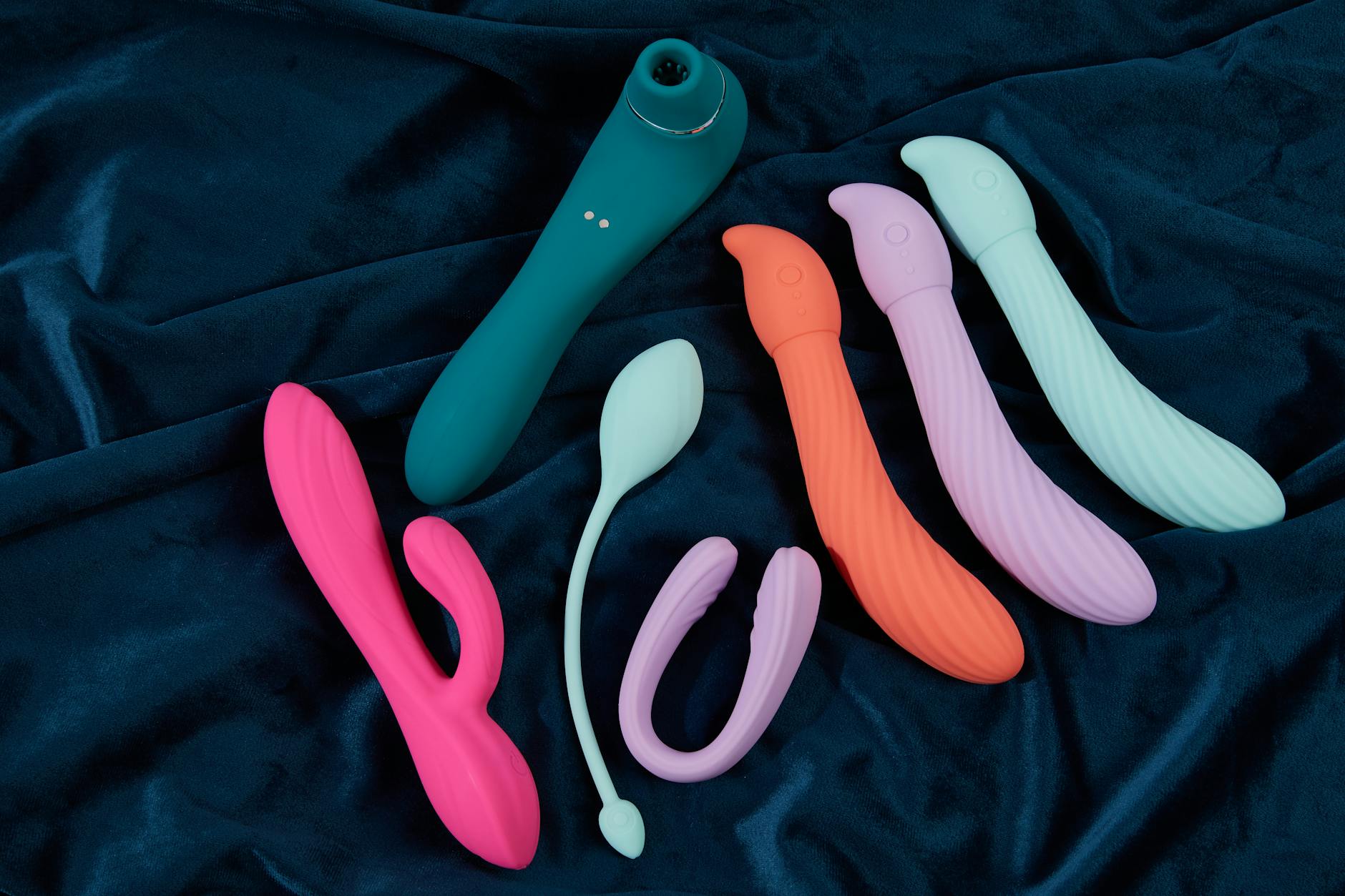
If you've had irritation, itching, or inflammation after using a vibrator, you're not alone. And it's almost never about you being "too sensitive." It's about the toy being made wrong. Most lemon vibrators, especially from Hello Nancy, use medical-grade silicone that actually works with your skin instead of against it.
Your vulva has the thinnest, most delicate skin on your entire body. It has more nerve endings than anywhere else and absorbs anything it touches directly into the bloodstream. That's not metaphorical. It's literally why medicines are sometimes delivered via suppository instead of by mouth.
Most cheap vibrators are made from:
PVC or latex with phthalates (chemicals that soften plastic and cause hormonal disruption)
Jelly rubber that leaches toxins and collects bacteria
TPE (thermoplastic elastomer) that degrades and sheds particles
Poorly sealed electronics that leak into the silicone
Your skin reacts to these materials the same way it would react to touching something toxic. Which it is.
Medical-grade silicone is the opposite. It's non-porous, hypoallergenic, and inert. Your body doesn't recognize it as a threat. It just sits there quietly while you enjoy yourself.
Beyond the material, the design of lemon vibrators from Hello Nancy accounts for sensitive skin in three specific ways.
First, the surface texture. Most vibrators have rough seams where the mold pieces were joined. Those seams can catch on delicate tissue and cause micro-abrasions that feel fine during use but show up as irritation hours later. High-quality lemon vibrators are molded seamlessly, which means zero catching and zero drag.
Second, the vibration pattern. Cheap motors vibrate chaotically at whatever frequency they default to. Your sensitive tissues get bombarded with intensity they can't modulate. Better lemon vibrators offer multiple patterns and lower baseline intensities so you can start gentle and increase only as your body wants.
Third, the edges. The base and any seams are smoothed to a polish. You won't feel sharp corners or rough spots. This sounds like a small detail until you've experienced the difference.
Here's something that blows people's minds. Cheap materials degrade. They get sticky, cloudy, or brittle. Medical-grade silicone stays exactly the same year after year.
Better yet, silicone is dishwasher-safe and autoclavable (yes, you can literally sterilize it in medical equipment). If you have serious skin sensitivities or a compromised immune system, this matters.
You can boil a lemon clitoral vibrator. You can run it through the dishwasher on high heat. You cannot do this with anything made from jelly, PVC, or TPE without breaking it.
Itching that starts during use or within 2-4 hours after
Redness or a rash that spreads beyond where the toy touched
A burning sensation that lingers
Swelling or puffiness
Any discharge that smells off
Stop using that toy immediately and switch to something made from medical-grade silicone. Your symptoms will usually clear within 24-48 hours.
If they don't, or if the reaction is severe, see a gynecologist. Sometimes a skin condition exists independently and just flares up during use. But most of the time, it's the toy.
Knowing what to stay away from is half the battle.
PVC and plastic. Often labeled as "jelly" or just listed with no material. These are porous and full of chemicals. Avoid entirely.
Latex. If you're latex-sensitive, this is obvious. Even if you're not, latex isn't ideal for long-term intimate contact.
TPE and elastomer. Marketed as "realistic" or "lifelike." They're cheaper than silicone and it shows. They degrade, get sticky, and shed particles you'll ingest through your mucous membranes.
Unfinished or porous ceramics. Sometimes marketed as "natural." They crack, harbor bacteria, and are not sterile.
The safest options are medical-grade silicone, borosilicate glass, and stainless steel. All three are non-porous, hypoallergenic, and last forever. For clitoral vibration specifically, lemon vibrators and other high-quality silicone designs are the gold standard.
If you're switching to a lemon clitoral vibrator after having skin reactions, start slow. Your nervous system might be a little protective.
Use plenty of water-based lubricant even though you don't strictly need it
Start on the lowest vibration pattern
Limit the first session to 5-10 minutes
Wait a few hours and check your skin for any response
Gradually increase duration and intensity over 2-3 uses
Most people find that after one or two sessions with a proper toy, their skin calms down completely and they can use the vibrator as much as they want.
Your vulva is living tissue. What you expose it to daily affects not just immediate pleasure but long-term health. Chronic low-level irritation from cheap materials can actually lead to dermatitis, bacterial overgrowth, and yeast infections over time.
Investing in a well-made toy from someone like Hello Nancy isn't just about immediate comfort. It's preventive care for a part of your body that deserves serious respect.
Lemon vibrators exist because the founder understood this. She wanted a tool designed for real bodies, not a cheap knockoff that treats intimacy like a disposable product.
Yes. Medical-grade silicone is completely latex-free and hypoallergenic. It's actually one of the best choices for people with multiple material sensitivities. If you've reacted to other toys in the past, silicone-based lemon vibrators are your safest bet.
With proper care, never. Medical-grade silicone doesn't degrade. I know people using the same toy for 10+ years with zero deterioration. As long as you wash it after use and store it in a cool, dry place, it'll last indefinitely. The battery or motor might eventually fail, but the silicone itself is permanent.
Medical-grade silicone is one of the few materials that won't trigger flare-ups. That said, if your skin condition is active, it's worth checking with your dermatologist first. They might recommend waiting until a flare calms down or using extra lubrication. But as materials go, silicone is about as gentle as it gets.
Hello Nancy uses medical-grade silicone across all their products, which is one reason their toys cost more upfront. You're not paying for branding. You're paying for material quality that actually lasts and actually protects your skin. Lower price points usually mean lower material standards. If you see a "lemon vibrator" for $15, that's not made from medical-grade silicone.
Medical-grade silicone has stricter purity standards and doesn't contain fillers, plasticizers, or recycled material. It's tested for biocompatibility, which means it won't leach chemicals into your body. Regular silicone might look similar but can contain additives. For intimate contact, medical-grade is non-negotiable.
Most people see improvement within 24-48 hours if the irritation was caused by the toy itself. If you've had chronic irritation, it might take a week or two for your skin to fully calm down. Use gentle soap and lukewarm water when you clean, avoid scented products in that area, and let your skin breathe between sessions. The improvement is usually dramatic once you switch to the right material.
Your skin is not the problem. The toy was. Lemon vibrators from Hello Nancy are built with medical-grade silicone and designed with sensitive tissue in mind. If you've had bad reactions to other toys, this is worth trying. Your body will thank you. If you want to learn more about choosing the right vibrator for your specific needs, our complete guide to lemon vibrators breaks down every option we offer and helps you find your match.