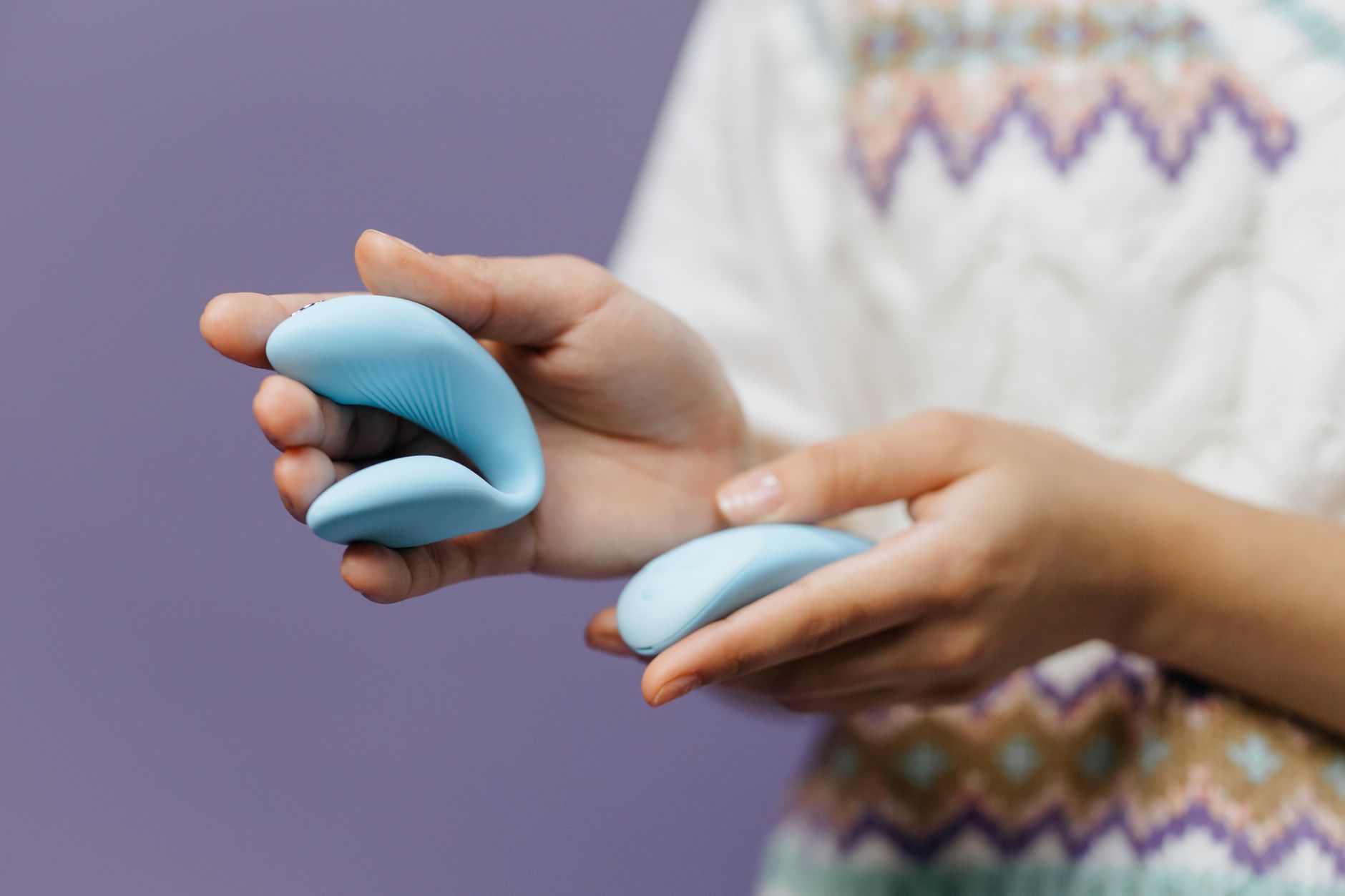
How Lemon Vibrators Help When You Have Vaginismus or Penetration Anxiety
Vaginismus makes penetration painful or impossible. Here's why lemon clitoral vibrators work differently than penetrative toys, and how to use them without triggering tension.
Vaginismus is involuntary. Your pelvic floor muscles tighten reflexively when penetration is attempted or even anticipated. It's not a choice, not a sign of low desire, and not something willpower fixes. Your nervous system has learned to protect you by clamping down. Understanding that makes everything else easier.
Here's what most people don't realize: you can have intensely pleasurable orgasms without ever touching the vaginal opening. This is where lemon vibrators become genuinely useful. Not as a workaround, but as a primary pleasure tool that sidesteps the trigger entirely.
The clitoris has roughly 8,000 nerve endings. The vaginal opening, by contrast, is the source of tension and pain for people with vaginismus. When you use a lemon vibrator, you're stimulating a completely different anatomical zone. This means no contact with the trigger area. No threat. No reflexive tightening.
Lemon vibrators use suction and gentle pulsing rather than direct friction or vibration. This matters because:
First, suction feels more diffuse than vibration. It stimulates the entire clitoral structure without sharp, localized pressure. For people whose nervous systems are already in protect mode, diffuse sensation feels less jarring.
Second, you control the intensity completely. Many lem vibrators have multiple patterns, but you can start at the lowest setting and stay there. No surprises. No sudden intensity spikes that trigger pelvic floor guarding.
Third, there's no penetration. No item entering any opening. No association with the mechanics of what usually causes pain.
Vaginismus lives in your nervous system, not your muscles. Your pelvic floor learned to tighten because your brain flagged penetration as a threat. It could be physical (prior pain, infection, surgery), psychological (anxiety, trauma, pressure), or relational (a partner who moves too fast, doesn't ask permission, isn't trustworthy).
Using a lemon clitoral vibrator helps retrain your nervous system. Here's how: you experience pleasure that has zero association with penetration threat. Your brain gradually learns that sexual pleasure doesn't automatically equal pain. That's huge.
When you're relaxed and focused on clitoral sensation, your pelvic floor is naturally more relaxed too. They're not separate systems. The more often you practice pleasure without penetration pressure, the more your nervous system recalibrates.
Start with zero pressure to perform. You're not trying to have an orgasm or reach any endpoint. You're just exploring sensation.
Begin with the lowest setting. If your lemon vibrator has four or five patterns, start at one. Don't jump to stronger settings because you think you "should." The goal is safety first, intensity later.
Apply it externally only. The clitoral structure extends well beyond what's visible, so you have lots of surface area to explore. Experiment with different positions: directly over the clitoris, slightly to the side, above the hood. Notice what feels best without any sense of obligation.
Set a timer for 10 to 15 minutes. This removes the mental load of "how long should I do this?" Just explore for the duration and stop. Consistency matters more than marathon sessions.
If you feel tension building anywhere in your body, pause. Not to panic. Just to notice. The pelvic floor, your shoulders, your jaw. Vaginismus often comes with generalized tension everywhere. Learning where your body holds it is useful information.
Expect this to feel weird or awkward the first few times. You might feel nothing. You might feel pressure to "do this right" or reach some outcome. That's normal. Keep going anyway. Your nervous system needs repetition to update its threat assessment.
If you're in a relationship, your partner's presence and patience matter enormously. But be clear about what helps and what doesn't.
What helps: they're in the room, present but not coaching. They don't watch intensely or ask if it's working. They respect that this is your process, not a performance for them.
What doesn't help: they offer unsolicited advice, suggest faster progression, compare your timeline to what they've read online, or make it about their desire for penetration.
If penetration is something you both want eventually, that's a longer conversation separate from this. Using a lemon vibrator isn't a stepping stone to penetration. It's not practice for something else. It's pleasure in its own right, and your partner needs to understand that distinction.
Lemon vibrators are genuinely helpful, but they're not a substitute for working with someone trained in vaginismus. A pelvic floor physical therapist can teach you breathwork and gentle desensitization techniques. A sex therapist can help you understand the root of the fear. A therapist can address any relational dynamics that feed the anxiety.
Tools and professional support work together. A lemon vibrator gives you a way to experience pleasure and gradually decouple arousal from penetration threat. Therapy addresses why that threat exists in the first place.
The combination accelerates healing way more than either one alone.
Weeks one through four: you're building a new neural pathway. Pleasure without pain. Your nervous system is slowly, slowly learning that sexual sensation doesn't automatically mean threat.
Weeks four through eight: many people notice their baseline pelvic floor tension starting to soften. Not because they forced it, but because their nervous system is calming down.
Months two through four: if you've been consistent, you might notice that non-penetrative sex with a partner feels less anxiety-inducing. Or that you're curious about exploring other kinds of touch. Or that you want to try deeper intimacy in new relationships without the weight of performance.
This isn't linear. Some weeks you'll feel progress. Other weeks the tension returns. That's not failure. Your nervous system is rewiring. Progress isn't straight.
Lemon clitoral vibrators (like the Lem) were designed with external stimulation and ease of use in mind. The suction mechanism mimics oral sensation, which many people find less threatening than vibration. The quiet operation means less sensory overwhelm. The simple controls mean less thinking, more feeling.
They're also discreet, which matters if privacy or shame is part of your vaginismus story. Many people find it psychologically easier to explore pleasure with a toy that doesn't announce itself.
If and when you want to explore penetration again, you'll approach it differently. Not as a goal you're failing to reach, but as one option among many. You'll know your own body better. You'll understand what your pelvic floor feels like when it's relaxed versus guarded.
You might find that you want penetration rarely, or never. That's also completely fine. Your sexuality doesn't have to include penetration to be real or satisfying. A lemon vibrator is sufficient if it's sufficient for you.
Yes. Severe vaginismus just means your nervous system has learned a very strong threat response. A lemon vibrator that stays external works because it completely avoids the trigger zone. Start at the lowest intensity, use it in a calm environment, and expect the first few sessions to feel unfamiliar rather than pleasurable. Healing is possible, but it takes time and usually works best alongside professional support.
They don't cure it, but they're part of the healing toolkit. Vaginismus lives in your nervous system and often has roots in trauma, anxiety, or relational dynamics. A lemon vibrator helps by giving you a way to experience pleasure without triggering the protective response. Over time, this helps recalibrate your nervous system. But addressing the underlying cause usually requires therapy as well.
It varies widely. Some people feel significant shifts in a month or two. Others need three to six months or longer. Consistency matters more than duration. What matters is that you're building new neural pathways and retraining your nervous system. Pushing penetration before you're ready undoes all that work, so patience is actually the fastest route.
Completely normal. Vaginismus often comes with reduced sensation as part of the protective response. Your nervous system is literally dampening sensation to keep you safe. As you use a lemon vibrator consistently and your nervous system calms, sensation often returns. Give it at least four to six weeks before expecting significant sensation change.
Yes, but only if you trust them completely and you're directing the experience. Tell them exactly what intensity, pressure, and touch feels safe. Stop whenever you need to, and make it clear that stopping doesn't mean failure. For many people, having a trusted partner involved actually accelerates nervous system healing because the brain receives a safety signal from someone else while experiencing pleasure.
Not necessary for external clitoral stimulation, but some people prefer the feeling. If you do use lube, choose water-based and use it sparingly since suction works better without excess liquid. The real benefit of lube in vaginismus recovery isn't mechanical; it's psychological. Using lube is a permission slip to slow down and be gentle with yourself.
Vaginismus is real, it's common, and it's treatable. A lemon vibrator is one tool that helps by offering pleasure completely separate from the threat your nervous system has learned to associate with penetration. Paired with professional support and patience with yourself, it can be part of reclaiming pleasure on your own terms.