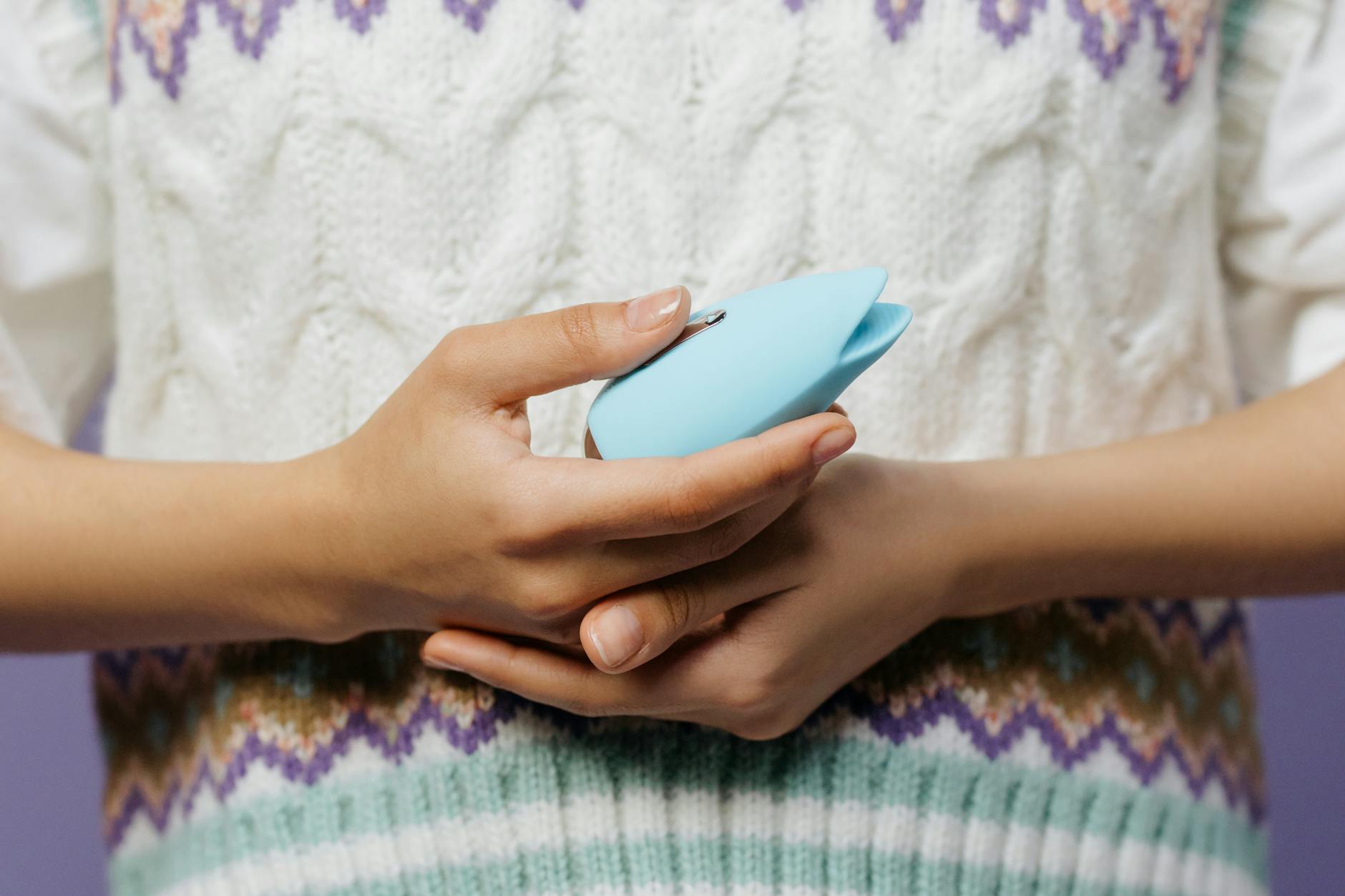
How Lemon Vibrators Help When You're Struggling With Pleasure After Childbirth
Your body has done something extraordinary. The question now is whether it gets to feel good again. Here's what actually happens, and how to rebuild pleasure when everything feels different.
Your body just did something most of human biology considers its ultimate job. And now nobody wants to talk about whether it feels good anymore.
Postpartum pleasure isn't a luxury item. It's part of recovery. It signals that your nervous system is regulating, that you're reconnecting with yourself, and that the psychological wound of birth is starting to close. But almost nobody tells you that pleasure can feel completely off limits for months. Or that when you do try, something feels fundamentally different.
The changes depend on how you gave birth. After vaginal delivery, tissues are inflamed, sometimes torn, and flooded with relaxin and oxytocin. Even if there's no visible tearing, the microtrauma is real. The pelvic floor gets stretched and needs to rebuild its tone and coordination. Sensation can feel muted, numb, or weirdly hypersensitive all at once.
After cesarean birth, you're dealing with surgical healing, scar tissue formation, and the same hormonal shifts. Plus the psychological weight of surgery adds a layer most people don't anticipate.
Then there's breastfeeding. Prolactin tanks estrogen, which dries out vaginal tissue the same way menopause does. Your breasts, which might have been a source of pleasure, now belong to someone else eight times a day. That's not metaphorical. That's real neurological and emotional displacement.
Honestly, the tissue healing is the easier problem to solve. The mental piece is where most people get stuck.
You're exhausted in a way you've never been exhausted. Your body feels like a rental property that got trashed during a party. You're touching a baby constantly, which paradoxically makes you want to be touched by zero other humans. And somewhere underneath all of that, there's often a layer of grief. Grief for the pregnancy body, for the version of yourself that could spontaneously want sex, for the relationship that used to have room for desire in it.
Adding pleasure back into that landscape feels selfish at first. Then it feels impossible. Then it starts to feel like something you have to do to save your relationship, which makes it feel like work. And that's when everything shuts down.
Lemon clitoral vibrators work differently than you might expect during this phase.
First, they're low-pressure options. You don't have to negotiate them with a partner. You don't have to explain why you want them or promise that they're not a reflection on your relationship. You can explore on your own timeline, which matters because postpartum desire doesn't follow a schedule. It appears in random five-minute windows when the baby is asleep and you're not actively feeding or bleeding onto something.
Second, suction-based vibrators like the Lem don't require the same kind of direct friction that traditional vibrators do. After birth, tissue is thinner, more delicate, and often too sensitive for aggressive stimulation. A lemon vibrator uses a gentler suction mechanism that stimulates the clitoral nerve without that raw mechanical pressure. You can start at low settings and work up over weeks or months without re-traumatizing healing tissue.
Third, the experience feels different from partnered sex in a way that's actually healing. There's no performance. There's no worry about whether your body is responding the way it should. There's just sensation, on your terms, at your pace.
Most doctors clear you for sex at six weeks. What they mean is that the bleeding stops and the risk of infection drops. What they don't mean is that your body is ready to feel good.
If you want to start exploring pleasure again, do this first.
Give yourself 8-12 weeks minimum. The six-week mark is the floor, not the finish line. Tissues are still remodeling. Your hormones are still catastrophically unbalanced. Your nervous system is still in survival mode.
Start with touch, not vibration. Lie down when someone else is holding the baby. Touch your own vulva. Notice where sensation is muted and where it's intense. This isn't foreplay. It's mapping. You're collecting data about what your body is actually capable of right now.
Use water-based lubricant. Even if you're not breastfeeding, even if your estrogen is returning, the tissue down there has been through something. Lubrication isn't optional. It's infrastructure.
When you're ready for a lemon vibrator, start at the lowest setting. Pattern one. Gentle pressure. Five minutes maximum, then stop. Your nervous system needs to be surprised by good sensation, not overwhelmed by it. You're not trying to come. You're trying to remember that your body can feel pleasure without pain.
This is where a lot of people get it wrong. They assume postpartum pleasure is a body problem, so they throw solutions at the body. But pleasure after birth is often a permission problem.
Your brain has been primed to see your body as utilitarian. Feeding, holding, moving. Pleasure feels indulgent when you're running on three hours of sleep and your partner is looking at you like you've become a different person.
You might need to have a conversation with your partner about what's actually happening. Not the sex conversation. The permission conversation. Something like, "My body is healing and my brain needs to know it can still feel good. This isn't about us right now. It's about me remembering I'm a person and not just a food source."
Most partners, given clear language and actual explanation, get it.
Postpartum depression is real. Postpartum anxiety is real. And both will completely kill pleasure in ways that no vibrator can fix.
If you're three or four months out and you still feel nothing when you touch yourself, if the idea of pleasure feels like a chore instead of a relief, talk to your doctor. Not because you're broken. Because depression is treatable and your nervous system might need actual help settling.
The same goes for pain. If penetration hurts, if your pelvic floor feels locked, if something feels wrong, pelvic floor physical therapy changes everything. Most people never try it because they don't know it exists. It exists. It works.
Postpartum pleasure doesn't bounce back like it did in your twenties. It rebuilds. Sometimes it rebuilds differently. Sometimes it rebuilds better because you finally know what you actually want instead of what you think you're supposed to want.
Lemon vibrators and other tools can help you get there. But they're not the fix. They're the permission slip.
Most doctors recommend waiting until the six-week postpartum checkup, but many people aren't physically or emotionally ready at that point. Bleeding needs to have mostly stopped (light spotting is okay, but active flow means wait longer). If you had a tear or episiotomy, tissue remodeling takes 8-12 weeks minimum. Start with gentle external touch before introducing any vibrator, and never use vibration on a site of active healing. If something feels wrong, it probably is. Check with your doctor.
Breastfeeding tanks estrogen, which directly suppresses arousal and dries tissue. Using a lemon clitoral vibrator with lubricant can help restart sensation without requiring the partner interaction that feels impossible when you're touched out. Solo pleasure is different from partnered sex. One can feel restorative while the other feels impossible. They're not the same thing, so don't compare them. Some people find that rebuilding solo pleasure helps them eventually want partnered sex again. Others find that pleasure stays solo for months. Both are normal.
This is about insecurity, not the vibrator. A vibrator isn't trying to replace your partner. It's trying to help you remember that pleasure isn't transactional. A partner who feels threatened by your solo pleasure rebuilding might also feel threatened by your body doing literally anything that isn't serving their needs. That's information. It's worth having a real conversation about what's happening in your relationship, maybe with a couples therapist. How to use lemon vibrators with a partner when you're nervous about toys covers the communication side more deeply.
It's common, but it's not mandatory. Some tissue numbness and hypersensitivity is normal. Complete sensation loss usually points to one of three things: depression or anxiety, hormone imbalance (especially if breastfeeding), or pelvic floor dysfunction. Any of these is fixable. Numbness is a symptom, not a personality trait. If sensation hasn't started returning by four months postpartum, talk to a healthcare provider. Pelvic floor physical therapy helps most people. So does treating postpartum depression if that's what's actually happening.
In most cases, yes, but timing matters. Active tears need time to stop bleeding and start scabbing over. That's roughly two weeks. After that, as long as there's no infection, gentle sensation work can actually help nerve endings rewire. A lemon vibrator at the lowest setting can be part of that, but it shouldn't be the first thing you try. Start with gentle touch. Let your brain and body remember they're connected. Then, if you want, add a vibrator when sensation starts coming back online. If pain increases, stop. Talk to your doctor or a pelvic floor therapist.
This is the hardest one. You're both exhausted. You're both grieving the relationship that existed before the baby. You're both probably feeling rejected. And you're both looking at each other like, "Are we ever going to want each other again?" The answer is usually yes, but not on the timeline you expect. Solo pleasure rebuilding is often the gateway back to partnered desire because it reminds you that you're a body that can feel things outside of survival mode. Once you remember that, partnered sex can feel less like an obligation and more like reconnection. Talk to your partner about this. "I'm rebuilding my own pleasure because I need to feel like myself again. This isn't about us yet. But it might help us eventually." Most partners, given honesty, can hear that.
Postpartum pleasure isn't frivolous. It's part of rebuilding your identity after your body has fundamentally changed. A lemon vibrator can help. But what helps more is permission. Permission to need something for yourself. Permission to rebuild slowly. Permission to ask for help when things feel stuck. Your body did something extraordinary. It deserves to feel extraordinary again.
If you're struggling with pleasure after birth and want to explore tools that work for sensitive postpartum tissue, reach out. We're here to help.