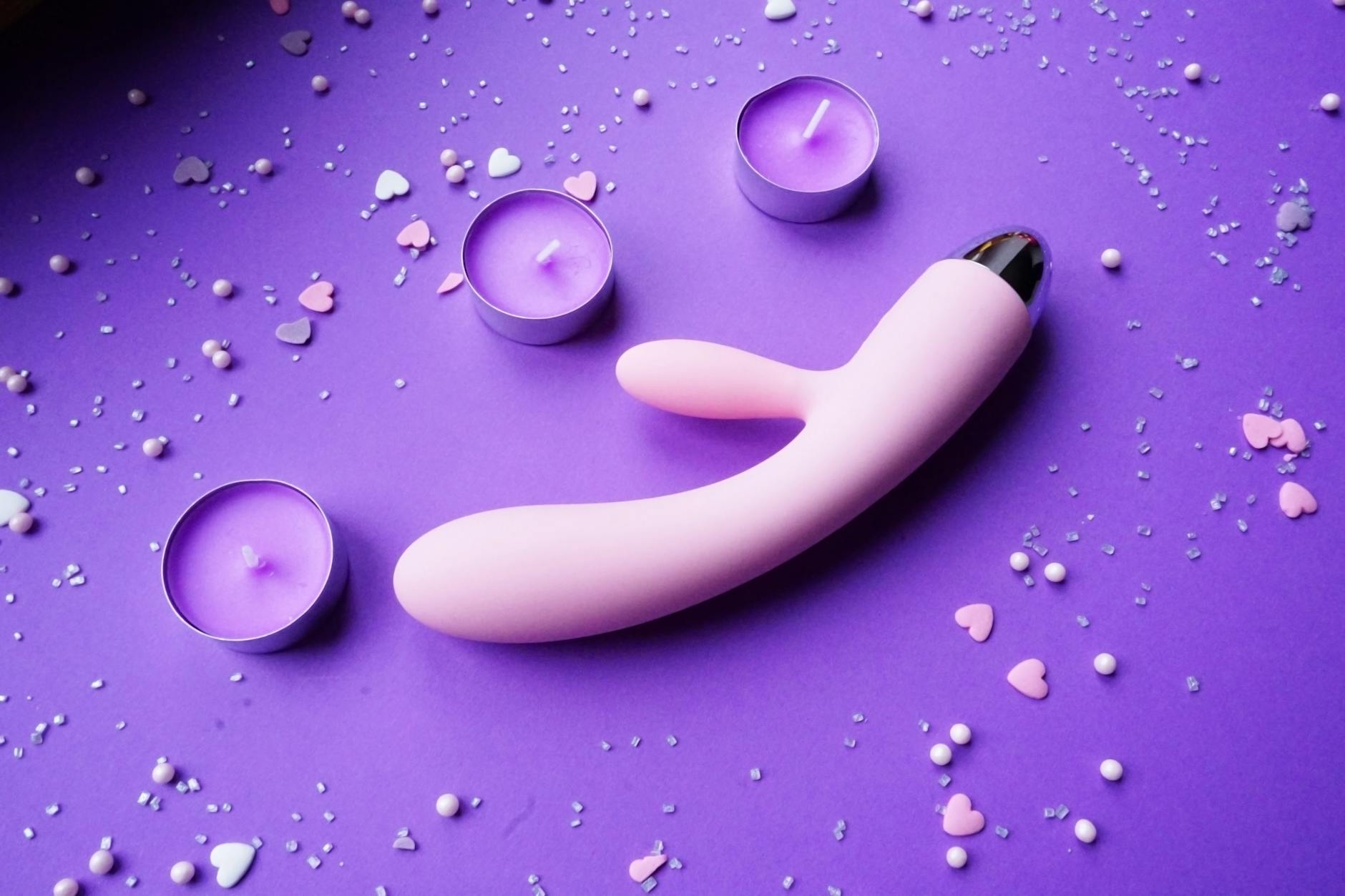
Does a Lemon Vibrator Feel Different After Hormone Changes?
The real answer: yes and no. Here's what shifts with your hormones, why suction-based stimulation holds up better than vibration alone, and why your best orgasms might still be ahead of you.
Your clitoris doesn't stop working when your hormones change. It rewires. And honestly, that's not the disaster story you might have heard. For many people, a lemon vibrator or any clitoral vibrator actually becomes more essential, not less, because the type of stimulation it delivers plays really well with how tissue responds after hormonal shifts.
Estrogen and testosterone both shape how sensitive your clitoris is and how quickly it responds to touch. When those hormones fluctuate or drop, tissue becomes thinner and more delicate. The blood vessels that fill with blood during arousal respond more slowly. The nerve endings don't vanish, but the pathway to activation changes.
Here's the part that gets missed in most conversations: this doesn't mean less pleasure. It means different pleasure. And sometimes it means better pleasure, once you understand what your body needs.
When estrogen drops, the clitoral hood (the skin covering the clitoris) can become tighter and more sensitive to direct friction. This is why people who've always loved strong vibration sometimes find that the same toy feels too intense. It's not that your clitoris gave up. It's that direct contact now borders on uncomfortable.
This is exactly where a lemon vibrator or other suction-based clitoral vibrator shines. Instead of direct friction, suction creates a gentle pull and release rhythm that stimulates the entire clitoral structure without requiring the same pressure. For people navigating hormonal shifts, it often feels more approachable.
The clitoral suction vibrator works through air-pulse technology, which activates a wider sensory field than traditional vibration. Rather than pressing against sensitive tissue, it surrounds the area and creates waves of stimulation.
After hormonal changes, this matters because:
Thinner tissue tolerates suction better than high-frequency vibration. Your clitoris has thousands of nerve endings that respond to pressure and pulling. Suction engages those nerves without the same abrasive friction that can cause irritation on hormone-sensitive skin.
You stay in control of intensity. A lemon sucker lets you modulate how much of your clitoris is drawn into the opening, how much air pressure you're receiving, and at what speed. With traditional vibrators, you're locked into one frequency. With a lemon vibrator, you're creating a custom experience.
Orgasms often feel different, not weaker. People report that post-hormonal-shift orgasms from suction devices feel more diffuse and full-body, rather than pointed and localized. Some find them deeper. Some prefer the shift. Some miss the sharp intensity and need time to adjust.
Hormonal changes don't happen overnight, and neither does your adjustment to new sensation.
In the first 2-6 weeks after significant hormone shifts, you might notice your usual go-to vibrator feels weirdly intense or doesn't deliver the response you expect. This isn't permanent. Your nervous system is recalibrating. A lemon vibrator's gentler suction approach lets you explore sensation without frustration during this recalibration window.
After 2-3 months, many people report that sensitivity bounces back, but often differently. Some find they need more time before orgasm kicks in. Others find that they can have multiple orgasms more easily. The pattern you had before isn't gone, it's just... rearranged.
After 6 months or longer, you're in new territory. Your body's baseline response is different. A clitoral vibrator or lemon sucker that felt odd at month two might now feel perfect because you've learned the new language your body speaks.
Hormonal changes often mean less vaginal lubrication. But here's the thing: your clitoris doesn't need lubrication to feel good. It's not a friction zone. You can absolutely use a lemon vibrator or any suction device without any lube at all.
That said, a tiny bit of lube around the external clitoral area helps with comfort and glide. If you're using lubrication, stick to water-based. Silicone lube can damage silicone toys, and mineral oil clogs pores.
Some people find that hormonal changes make their external tissue more sensitive to temperature. A lemon vibrator warms up with use, which some find soothing. If you prefer it cool, five minutes in the fridge before play helps.
One of the biggest changes after hormonal fluctuations is arousal ramp-up. You might need 15 to 25 minutes of foreplay instead of five.
This isn't a bug. It's a feature if you reframe it. You can't rush a good lemon sucker experience if your body needs time. But once arousal builds, many people find that the sensation arrives more intensely than before because they've created a deeper, sustained state of arousal.
Start with the lowest suction setting. Let your body warm up. Gradually increase intensity as you feel the response deepen. This slow-build approach often yields better orgasms than jumping straight to high intensity.
If your clitoris feels painful or raw during or after stimulation with your lemon vibrator, that's a signal. Genitourinary syndrome of menopause (GSM) is real and treatable. A topical estrogen cream applied to the external clitoris a few times weekly can shift tissue resilience in 2-3 weeks. Talk to your GP or a gynecologist trained in this area.
If arousal itself feels absent even though you want to feel desire, a conversation with your doctor about testosterone might be worth having. It's not as commonly prescribed in some countries, but it's available and can be genuinely transformative for people who've experienced significant hormone drops.
Neither of these is a sign you're broken. It's just information your body is giving you about what it needs right now.
Here's what the science often skips: your brain is the biggest sex organ you have. Hormonal changes trigger anxiety and identity shifts. You might feel less sexy, worry that your body is changing permanently, or grieve the sensation you used to have. That psychological weight can suppress arousal even when tissue is physically responsive.
This is where slowing down really helps. A lemon vibrator creates a ritual. You set aside time. You're not optimizing for speed. You're exploring sensation. For many people, that intentionality rewires the brain's response and brings desire back online, independent of hormones.
If your partner is involved, a conversation about what's changing in your body (separate from what's changing in your relationship) matters. Hormonal shifts are not a relationship problem unless you treat them as one.
Not completely. Your clitoris has the same nerve structure. But the sensitivity threshold and arousal timeline will likely shift. Many people find suction devices like lemon vibrators easier to adjust to because they don't rely on the same direct friction as traditional vibrators.
Yes. The vast majority of people remain fully capable of orgasm after hormonal changes. The path to orgasm changes, but capacity doesn't. In fact, some people report their most intense orgasms come after significant hormonal shifts because their brain is less distracted and more present.
Think weeks, not days. Most people report that their body feels "normal again" (which is a new normal) within 4-12 weeks. But some adjustments take longer. Be patient with yourself. Consistency with a tool like a lemon vibrator helps your nervous system recalibrate faster.
Yes, slightly. Hormonal birth control creates a predictable, steady hormone state. Natural hormone fluctuations are more volatile. Some people find they're more sensitive to changes during natural cycles than during birth control use. The lemon sucker approach works well either way because it's less dependent on a specific arousal pattern.
Not necessarily right away. Give yourself 4-6 weeks to adjust to new sensation before you assume the toy stopped working. But if it still feels painful or unsatisfying after that window, experiment with different intensities and patterns. You might also try a different toy designed for different stimulation types.
Completely. Hormone therapy can actually restore some of the previous sensation pattern, so you might feel a shift back toward what you experienced before hormonal changes. Some people need to adjust their toy choice again as hormones rebalance. That's normal and fine.
Hormonal changes reshape sensation, but they don't erase it. Your clitoris, your capacity for pleasure, and your ability to orgasm are still there. What changes is the path to getting there.
A lemon vibrator or other clitoral vibrator built on suction technology often handles that transition better than traditional vibration because it's gentler on more delicate tissue while still being intensely stimulating. But the bigger truth is this: you deserve tools that work for your body right now, not the body you used to have.
If you're curious about what works for you after hormonal shifts, start with what you have. Slow down. Build arousal gradually. Notice what feels good at each intensity level. You might be surprised by what your body is still capable of.